


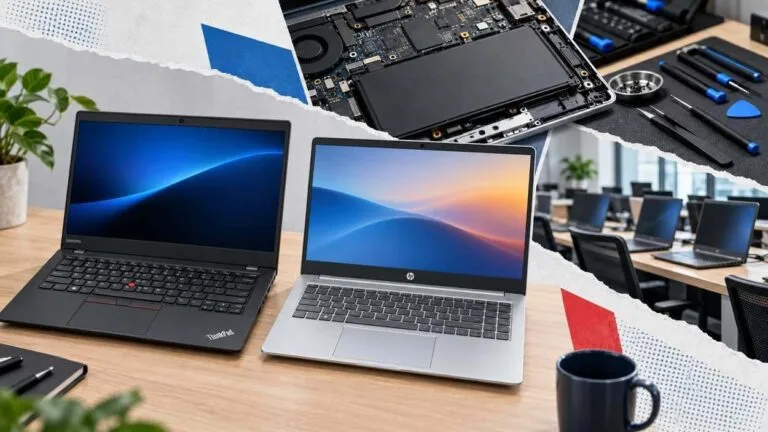

Lenovo vs HP is the laptop comparison people search for most, and the reason is simple: the two companies ship more PCs than anyone else. Lenovo sold 16.6 million computers in the second quarter of 2026 and HP sold 13.0 million, so almost every store shelf, school bulk order and corporate fleet ends up choosing between them.
A lot has changed since we first compared Lenovo and HP laptops. HP retired the Pavilion, Envy and Spectre names in 2024 and now sells consumer laptops as OmniBook. Lenovo redesigned the ThinkPad X1 Carbon and earned iFixit’s top 10/10 repairability score for the ThinkPad T series. Windows 10 reached end of support in October 2025, and memory prices pushed laptop prices up across both brands.
Lenovo vs HP at a glance
Use this table to compare Lenovo and HP laptops on the points that decide a purchase. “Edge” is our call after reading both companies’ 2026 announcements, spec sheets and warranty terms.
Area | Lenovo | HP | Edge |
|---|---|---|---|
Worldwide PC shipments, Q2 2026 | 16.6 million, 25% share | 13.0 million, about 20% share | Lenovo |
Business flagship | ThinkPad X1 Carbon Gen 14, from $1,999, 996 g | EliteBook X G2i, under 1 kg, priced at release | Tie |
Repairability | ThinkPad T14 Gen 7 scores 10/10 on iFixit | EliteBook X G2 keyboard swaps in about 10 minutes; no current iFixit score | Lenovo |
Consumer lineup | IdeaPad, Yoga, Yoga Slim, Yoga Pro | OmniBook 3, 5, 7, X and Ultra | Tie |
Gaming | Legion, LOQ, Legion Go handheld | OMEN and Victus, now under HyperX | Tie |
Standard warranty | ThinkPad base terms run 1 or 3 years by model; consumer lines 1 year | 1 year on most laptops | Lenovo for business |
Paid support plans | Premium Care and Premium Care Plus (24/7, onsite, accidental damage) | Care Pack (up to 3 years, accidental damage, next-day onsite) | Tie |
Preinstalled software | Lenovo Vantage plus trials on consumer models | HP Support Assistant plus partner trials | Tie |
Copilot+ PCs | Snapdragon X2, Intel Core Ultra Series 3, AMD Ryzen AI 400 | Snapdragon X2, Intel Core Ultra Series 3, AMD Ryzen AI | Tie |
Source: Omdia PC Market Pulse (July 9, 2026); Lenovo and HP CES 2026 announcements; iFixit; Lenovo PSREF; HP warranty explainer; Lenovo Premium Care and HP Care Pack pages.
Our verdict up front: Lenovo is the safer buy for business laptops, repairability and clear model naming, while HP matches or beats it on consumer design, battery-life claims and the breadth of its OmniBook range. Gaming and everyday laptops are a toss-up decided by the configuration in front of you. The sections below explain why.
Lenovo vs HP market share: who sells more laptops?
Lenovo has been the world’s largest PC maker for years, and 2026 did not change that. Omdia’s PC Market Pulse for the second quarter of 2026 put Lenovo at 16.6 million units and a 25% share, with HP second at 13.0 million units. Dell followed with 9.3 million, Apple with 7.3 million and Asus with 5.0 million, according to Omdia’s July 9, 2026 release.
The whole market shrank. Omdia counted 65.7 million PCs in the quarter, down 3.6% from a year earlier, and HP’s volume fell 9% against Lenovo’s 2% dip. IDC’s tally came in at 68.2 million units, down 4.9%, the first decline after nine straight quarters of growth, as the firm noted on its own account.
Why does a market-share number matter to you? Scale buys parts. The IDC forecast from June 2026 expects no relief in the memory shortage before the end of 2027 and warns that the biggest PC makers will gain share as smaller rivals struggle to source DRAM and SSDs. Lenovo and HP are the two brands most likely to keep full lineups in stock while that lasts.
A short history of Lenovo and HP
HP is the older company by 45 years. Bill Hewlett and Dave Packard started it in a Palo Alto garage in 1939, and the company was incorporated in 1947, as HP’s annual report records. On November 1, 2015, the company split in two: HP Inc. kept the PCs and printers, and Hewlett Packard Enterprise took the servers and services, per the separation filing. Every HP laptop you can buy today comes from HP Inc.
Lenovo began in Beijing in 1984 under the name Legend, according to the company’s own history. Its defining moment came on May 1, 2005, when it closed the purchase of IBM’s Personal Computing Division, ThinkPad included, for $1.25 billion, as the closing announcement states. The ThinkPad X1 Carbon alone has sold more than ten million units since its 2012 debut, Lenovo said at CES 2026.
Lenovo laptop lineup in 2026
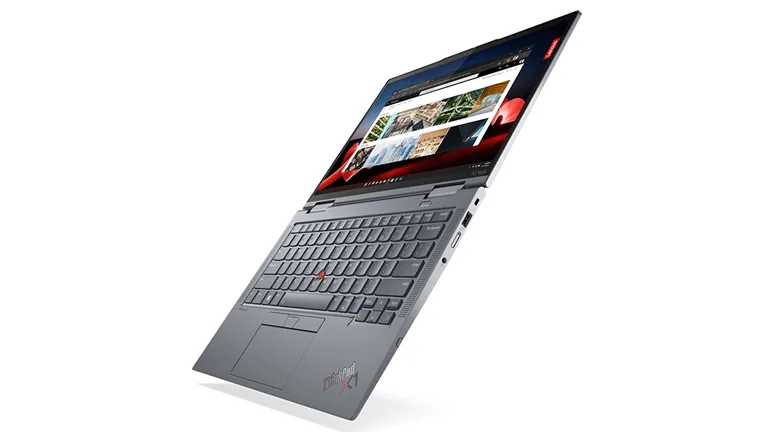
Lenovo’s naming is the easiest in the industry to decode. Think means business, Idea means home, Yoga means premium consumer, and Legion means gaming. Within ThinkPad, X1 is the flagship, T is the mainstream corporate machine, and X13, L and E fill in compact, budget and small-business slots.
Series | Who it is for | 2026 examples | Announced US starting price |
|---|---|---|---|
ThinkPad | Business and professionals | X1 Carbon Gen 14 Aura Edition, X1 2-in-1 Gen 11, X9 15p, T14 Gen 7, T16 Gen 5 | $1,999 (X1 Carbon), $2,149 (X1 2-in-1) |
ThinkBook | Small business | ThinkBook 14 Gen 9, 16 Gen 9, Plus Gen 7 Auto Twist | $1,649 (Plus Gen 7) |
Yoga | Creators and premium consumers | Yoga Pro 9i Aura Edition, Yoga Slim 7i Ultra, Yoga Slim 7x, Yoga 7a 2-in-1 | $849.99 to $1,899.99 |
IdeaPad | Students and everyday use | IdeaPad Pro 5i, IdeaPad Slim 5x, IdeaPad 5a 2-in-1 | $799 to $1,699 |
Legion and LOQ | Gaming | Legion Pro, Legion 7 and 5, LOQ, Legion Go Gen 2 handheld | Varies by configuration |
Source: Lenovo StoryHub CES 2026 business and consumer releases (January 6, 2026); ThinkPad T14 Gen 7 and T16 Gen 5 announced at MWC, March 2026.
The headline machine is the ThinkPad X1 Carbon Gen 14 Aura Edition. Lenovo rebuilt the interior with a “Space Frame” that mounts components on both sides of the motherboard, so the 14-inch laptop starts at 996 g while running Intel Core Ultra X7 Series 3 chips with a 50 TOPS NPU, per Lenovo’s CES 2026 announcement. The battery, keyboard, USB ports, speakers and fans are all replaceable, and it starts at $1,999.
For most companies the T14 Gen 7 and T16 Gen 5 matter more. Announced at MWC in March 2026, they moved to a 75 Wh battery that pops out without tools and to LPCAMM2 memory up to 64 GB, and the spec sheet lists a passed MIL-STD-810H test. On the consumer side, the Yoga Pro 9i Aura Edition pairs an Intel Core Ultra 9 Series 3 with an RTX 5070 laptop GPU and a 3.2K tandem OLED for $1,899.99, while the Yoga Slim 7x brings Snapdragon X2 to a 1.17 kg body for $949.99, according to the consumer CES release.
Budget buyers get the IdeaPad range. The IdeaPad Slim 5x starts at $899 with a Snapdragon X2 Plus chip and a claimed 21 hours of battery, and the IdeaPad 5a 2-in-1 starts at $799 with AMD Ryzen AI 400 and a pen. Lenovo’s gaming laptops keep the Legion and LOQ names; the CES release confirmed refreshes across both plus a SteamOS version of the Legion Go Gen 2 handheld, but left pricing to retailers.
HP laptop lineup in 2026
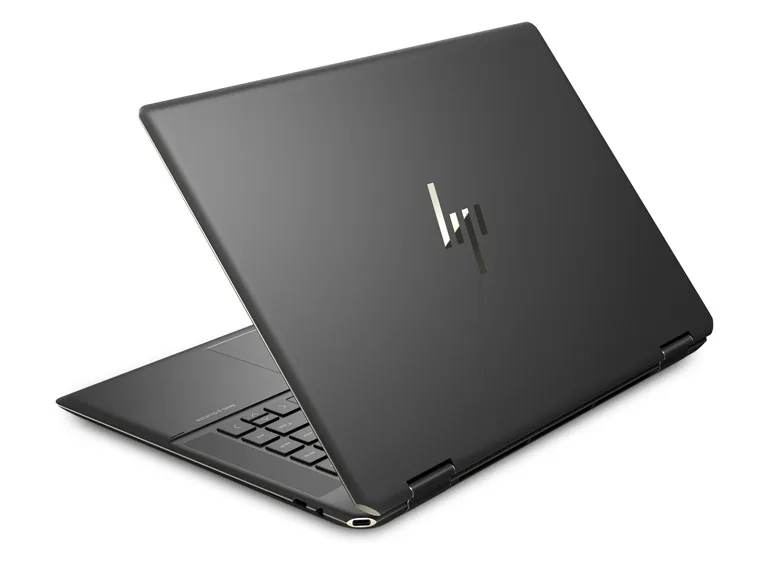
HP rewrote its names in May 2024. Consumer PCs now carry the Omni prefix (OmniBook laptops, OmniStudio all-in-ones, OmniDesk towers), commercial PCs keep EliteBook and ProBook, and gaming stays OMEN. Each name carries a number from 2 to 10, with X standing in for 10: odd numbers are consumer models, even numbers are business models, and a bigger number means a better machine, as HP explained in its branding update. Spectre, Envy and Pavilion are gone.
Series | Who it is for | 2026 examples | What to know |
|---|---|---|---|
OmniBook 3 and 5 | Students and everyday use | OmniBook 3 16, OmniBook 5 14 and 16 | Intel, AMD and Snapdragon options; OLED on some models; the OmniBook 3 16 claims up to 45 hours of video playback |
OmniBook 7 and X | Step-up consumer | OmniBook 7 Flip, OmniBook X 14 | OmniBook X launched at $1,199.99 in June 2024 on Snapdragon X Elite |
OmniBook Ultra | Premium consumer and creators | OmniBook Ultra 14 (2026) | Snapdragon X2 Elite or Intel Core Ultra Series 3, up to 85 TOPS NPU, 3K OLED |
EliteBook | Business | EliteBook X G2a, G2i, G2q, X Flip G2i; EliteBook Ultra, 8 and 6 | Under 1 kg, HP Wolf Security for Business, keyboard replaceable from the top |
ProBook and ZBook | Budget business and workstations | ProBook 4 and 2, ZBook mobile workstations | Cheaper managed laptops and ISV-certified workstations |
OMEN and Victus | Gaming | HyperX OMEN MAX 16, OMEN 16, Victus 15 | OMEN and HyperX merged under one gaming brand at CES 2026 |
Source: HP Newsroom, May 2024 branding update and OmniBook X release; HP CES 2026 releases (January 2026); HP OmniBook 5 and OmniBook Ultra product pages.
The consumer flagship is the OmniBook Ultra 14. HP ships it with either Qualcomm’s Snapdragon X2 Elite or Intel’s Core Ultra Series 3, and the Snapdragon version carries an NPU rated at up to 85 TOPS, which HP calls a first for consumer notebooks, per its CES 2026 release. HP’s product page adds forged aluminum and 20 MIL-STD-810H tests to the pitch. The rest of the OmniBook family, from the 3 to the X, was refreshed with Snapdragon X2 and OLED options at the same show.
For business, the EliteBook X G2 series is HP’s answer to the X1 Carbon. Buyers pick AMD (G2a), Intel (G2i) or Qualcomm (G2q) on the same chassis, the Intel model weighs under 1 kg, and HP claims up to 29 hours of battery life on its internal video test. HP scheduled the G2i for February 2026 and the AMD and Qualcomm versions for spring, but said pricing would be set closer to availability, as its EliteBook announcement notes.
Price: is Lenovo or HP cheaper?
Neither brand is reliably cheaper any more. Both sell $500 laptops through retailers and $2,000 flagships through their own stores, and the same 16 GB, 512 GB configuration usually lands within a few dollars of its rival. Lenovo publishes launch prices with its announcements, which makes its ladder easy to read; HP tends to price at the point of sale.
Every laptop got more expensive in 2026. IDC expects average PC selling prices to rise 17% this year because DRAM and NAND are scarce, and Omdia measured 20% to 40% increases across comparable product lines compared with a year earlier. Windows Central’s review puts the 2026 OmniBook Ultra 14 at $1,899, and Lenovo’s Yoga Pro 9i lands at $1,899.99, so the two consumer flagships are priced within a dollar of each other.
Three buying rules follow from that. Compare exact configurations, because memory is now the most expensive line item and a 32 GB model can cost hundreds more than a 16 GB one. Prefer laptops with replaceable memory, such as the ThinkPad T14 Gen 7 with LPCAMM2 or the IdeaPad 5x 2-in-1 with two slots, so you can start small. And check whether a model ships with Windows 11 Home or Pro; our Windows 11 editions guide explains which features you give up on Home.
Reliability and build quality
Both companies test their business laptops against MIL-STD-810H, the US military’s environmental test standard for drops, vibration, dust, humidity and temperature. Lenovo’s spec sheet for the ThinkPad T14 Gen 7 lists the test as passed, and HP says the OmniBook Ultra survives 20 of those tests, according to its OmniBook Ultra page. A passed test means the laptop survived a lab procedure once; it says nothing about failure rates over three years of use.
Neither Lenovo nor HP publishes repair or return rates, so any claim that one brand “breaks less” rests on anecdote. What you can judge is construction. ThinkPad X1 and T models use magnesium and aluminum shells, spill-resistant keyboards and hinges rated for corporate life. HP’s OmniBook Ultra uses forged aluminum, while both brands’ cheapest IdeaPad and OmniBook 3 models rely on plastic with more flex.
Our practical advice: if the laptop will live in a backpack, buy from the business lines of either brand, or from Yoga and OmniBook Ultra at minimum. Reliability differences between an IdeaPad Slim 5 and an OmniBook 5 are smaller than the difference between either of them and a ThinkPad or EliteBook.
Repairability and upgrades
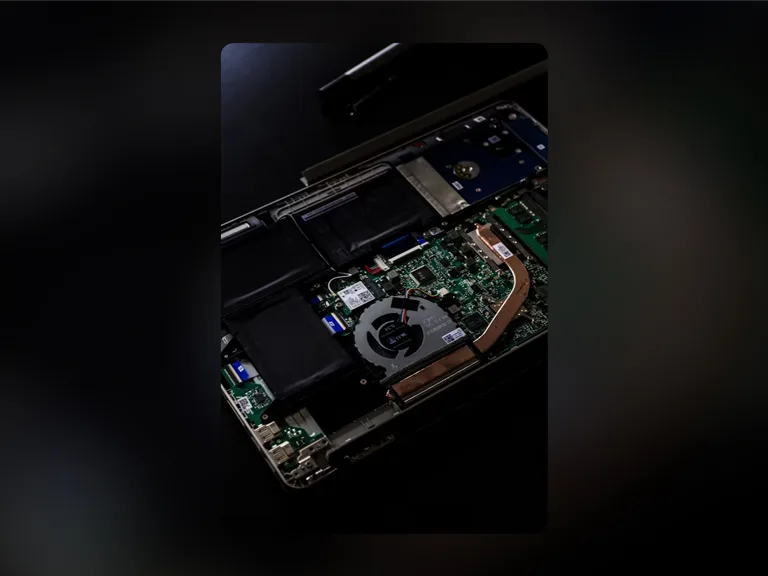
Lenovo wins this section outright. The ThinkPad T14 Gen 7 and T16 Gen 5 earned a provisional 10/10 from iFixit in March 2026, the first perfect score for the T series, after the T14 Gen 5 had already scored 9/10 in 2024, as iFixit reported. Its battery releases with two buttons, the memory sits on LPCAMM2 modules, and Lenovo publishes parts and manuals for self-repair. Lenovo’s X1 Carbon Gen 14 and X1 2-in-1 Gen 11 carry a 9/10 from the same testers.
HP has made progress on its business machines. The EliteBook X G2 uses a top-mounted keyboard that HP says swaps in about 10 minutes without opening the chassis, down from about 50 minutes on the previous generation. That is a real gain for IT departments, but we could not find a current iFixit score for any 2026 HP laptop, and the consumer OmniBook X and Ultra use soldered LPDDR5x memory.
If you plan to keep a laptop for five years or upgrade its memory later, a ThinkPad T or L series is the better bet. Read our SSD vs HDD guide before you buy storage upgrades for either brand, since most 2026 laptops from both take M.2 NVMe drives.
Warranty and customer support
Standard coverage is short on both sides. HP’s own guide says most of its laptops carry a 1 year standard warranty that covers parts and labor for defects, with accidental damage excluded, per HP’s warranty explainer. Lenovo sets the base term per model: the ThinkPad T14 Gen 7 spec sheet lists 1-year and 3-year options, carry-in or onsite, while consumer IdeaPad and Yoga models usually carry a one-year base warranty.
Support feature | Lenovo | HP |
|---|---|---|
Standard warranty | 1 year on consumer models; ThinkPad base options of 1 or 3 years, carry-in or onsite | 1 year on most laptops; longer terms on some commercial products |
Paid extension | Premium Care: 24/7 phone, chat and email, onsite support, prioritized repair | Care Pack: extends coverage from 1 to 3 years, pickup or on-the-spot repair |
Accidental damage | Premium Care Plus adds Accidental Damage Protection and a sealed-battery warranty of up to 3 years | Accidental Damage Protection add-on for drops, spills and surges |
Onsite service | Included in Premium Care | Next Business Day Onsite add-on |
Self-repair | iFixit partnership, published manuals and parts for ThinkPad | Modular EliteBook X G2 keyboard; parts through HP Parts Store |
Source: HP Tech Takes warranty explainer and HP Care Pack page; Lenovo Premium Care and Premium Care Plus pages; Lenovo PSREF ThinkPad T14 Gen 7 spec sheet.
The paid tiers are closer than the base terms. Lenovo’s Premium Care Plus bundles 24/7 support, onsite repair, accidental damage cover and a battery warranty of up to three years in one plan. HP’s Care Pack lets you assemble the same protection piece by piece, so it can cost less if you only want the extra years. Business buyers should price a three-year onsite plan from both before deciding; the laptop that looks cheaper often loses once support is added.
Bloatware and preinstalled software
What HP installs
HP is unusually candid about this. Its own bloatware explainer splits preinstalled software into manufacturer utilities and third-party trials that arrive “through licensing agreements or commercial partnerships,” names trial antivirus suites as the classic example, and lists HP Support Assistant and HP Wolf Security as the tools worth keeping. Consumer OmniBooks therefore land with a driver updater, a security trial and Microsoft’s usual Windows extras.
What Lenovo installs
Lenovo’s equivalent is Lenovo Vantage, which handles driver updates, battery charge limits, Wi-Fi security warnings and the antivirus it bundles. IdeaPad and Yoga models add trial software of their own, while ThinkPads with Windows 11 Pro arrive far cleaner. On either brand, the fastest fix is Windows 11’s “Reset this PC” with the option to remove preinstalled apps, or a clean install from Microsoft’s media tool.
Security features
Business laptops from both brands add hardware security on top of Windows. HP’s EliteBook X G2 ships with HP Wolf Security for Business, which HP describes as hardware-enforced protection “below, in, and above the OS” that keeps working offline, and the 2026 models add what HP calls quantum-resistant protection. ThinkPads carry Lenovo’s ThinkShield features, a fingerprint reader built into the power button and an IR camera for Windows Hello on many models.
Both brands sell Copilot+ PCs across Snapdragon X2, Intel Core Ultra Series 3 and AMD Ryzen AI chips. Microsoft requires an NPU capable of 40 or more TOPS for that label, as its developer documentation states, so any 2026 ThinkPad X1, Yoga Aura Edition, OmniBook Ultra or EliteBook X qualifies. Older or cheaper models from either brand may not.
Which is better for business, gaming, students and creators?
Lenovo vs HP for business
Lenovo, by a nose. ThinkPad’s keyboard, TrackPoint, three-year onsite options and 10/10 repairability make it the easier fleet to run, and the X1 Carbon Gen 14 went on sale in the first quarter of 2026 at a published $1,999. HP’s EliteBook X G2 is lighter on paper, claims longer battery life and lets one platform run AMD, Intel or Qualcomm, so companies already on HP’s Wolf Security stack have no reason to switch.
Lenovo vs HP for gaming
Call it even and buy on the GPU. Lenovo’s Legion and LOQ lines cover more price points and add the Legion Go handheld, while HP concentrated its effort into the HyperX OMEN MAX 16 halo model and the cheaper Victus range. Compare RTX 50-series tier, screen refresh rate and cooling before the badge; our gaming optimization tips apply to both.
Lenovo vs HP for students and everyday use
Tie. The IdeaPad Slim 5x at $899 and the OmniBook 5 sit in the same price band with similar Snapdragon, Intel and AMD options, and both brands discount heavily around back-to-school season. Pick the one with the better screen and the 16 GB configuration, then read our student laptop guide for the details that matter in a lecture hall.
Lenovo vs HP for creators
Lenovo for power, HP for portability. The Yoga Pro 9i pairs a discrete RTX 5070 with a 3.2K tandem OLED and a pressure-sensitive Force Pad, which no 14-inch OmniBook can match for video and 3D work. If you edit photos and travel, the OmniBook Ultra 14 offers a 3K OLED, forged aluminum and Snapdragon X2 battery life in a smaller bag. Considering a Mac instead? Our Mac vs PC comparison covers that decision.
Lenovo vs HP FAQ
Is Lenovo better than HP?
In an HP laptop vs Lenovo laptop matchup, Lenovo is better for business machines and repairability, while HP is at least as good for consumer laptops and battery life. For everyday and gaming machines the two brands trade wins model by model, so compare the exact configuration rather than the logo.
What is the difference between Lenovo and HP laptops?
Lenovo organizes its laptops as ThinkPad (business), ThinkBook (small business), Yoga (premium), IdeaPad (everyday) and Legion (gaming). HP uses OmniBook for consumers, EliteBook and ProBook for business, ZBook for workstations and OMEN or Victus for gaming, with numbers from 2 to X showing the tier. Lenovo leads on repairability and warranty options; HP leads on consumer design and its 85 TOPS NPU flagship.
Which lasts longer, a Lenovo or an HP laptop?
Neither company publishes failure rates, so no honest answer exists at brand level. Lenovo’s ThinkPad T14 Gen 7 and HP’s OmniBook Ultra both pass MIL-STD-810H tests, and a ThinkPad T series is easier to keep alive because its battery, memory and storage are user-replaceable. Consumer models from either brand typically last three to five years with care.
HP vs Lenovo for gaming: which is better?
Both make credible gaming laptops. Lenovo’s Legion and LOQ lines span more budgets and include the Legion Go handheld, while HP’s OMEN MAX 16 targets the top end and Victus covers entry level. Judge them on GPU tier, display refresh rate and thermals rather than brand.
Who owns Lenovo and HP?
Lenovo Group is a publicly traded company founded in Beijing in 1984 and listed in Hong Kong; it bought IBM’s PC business in 2005. HP Inc. is the Palo Alto company formed when Hewlett-Packard split in November 2015, and it is listed on the New York Stock Exchange.
Which brand sells more laptops, Lenovo or HP?
Lenovo. Omdia counted 16.6 million Lenovo PCs against 13.0 million HP PCs in the second quarter of 2026, giving Lenovo about 25% of the world market and HP about 20%.
So, Lenovo or HP: which laptop should you buy in 2026?
Buy a Lenovo ThinkPad if the laptop is a work tool you expect to repair, upgrade and keep for years, and buy the Yoga Pro 9i if you need discrete graphics for creative work. Choose HP when you want the lightest business machine with the longest battery claim, or when an OmniBook 5 or Ultra simply offers the better screen and price on the day you shop.
Whichever brand you pick, prices are rising through 2027 and memory is the line item that moves them, so buy the RAM you need now, favor models with replaceable parts, and price a three-year support plan into the total before you compare. Our laptop buying guide walks through the rest of the checklist.

Baten
For Core i3 processor, which one is better Lenovo or HP?
Steven Tamas
My experience with HP laptops left me with a very sour taste for the product line.
Over the course of 6 years I bought 3 HP laptops… 2 years between each purchase. I bought very capable relatively advanced machines so my daughters could use them during both high school and college.
All three failed. All three had the same problems. You would think that HP would identify problems and fix them in the next rev of their product.
Total fail. Complete waste of money. If you are going to buy HP, my experience is buy the cheapest possible and plan to use it as a door stop since they are NOT reliable over a several year period.
Goodbye permanently to HP. They never learned from their mistakes and I took on the chin… three times over 6 years.
Ramesh
Hi Rajesh,
I am planning to buy a laptop for office work purpose. Which one is better two in HP or Lenovo? Please give me the correct suggestion.
Ellen
Hi, Ramesh,
Try Lenovo for business, according to this & other articles. They’re more designed for business, i.e. lightweight, durable for toting around.
Mayur Koshti
Hi Rajesh,
I have planned to purchase laptop. I am an IT profesional so which is the best for me. HP or Lenovo ?
Thanks.
Fergus Zade
I find Lenovo products to be generally superior to HP.