


Apple’s ecosystem lock-in has evolved into one of the most influential strategies in modern consumer technology. By tightly integrating hardware, software, and services, Apple creates a seamless experience that keeps users engaged across devices. For example, professionals rely on features like Handoff and iCloud to move work effortlessly between iPhone and Mac. At the same time, consumers increasingly adopt bundled subscriptions such as Apple One for entertainment, storage, and payments. This interconnected approach not only boosts user convenience but also drives higher retention rates and recurring revenue for Apple.
As businesses across industries look to improve customer lifetime value and reduce churn, Apple’s ecosystem offers a practical, data-backed model worth studying. Let’s dive into the statistics that explain how this lock-in works and why it continues to strengthen.
Editor’s Choice
- Apple’s iPhone retention rate reached 92% in 2025, one of the highest in consumer tech.
- Global iPhone users surpassed 1.56 billion in 2025, up from 1.46 billion in 2024.
- Apple’s App Store attracts over 850 million weekly users worldwide.
- Apple services helped developers earn $550+ billion since 2008.
- iOS holds 57.97% smartphone market share in the U.S. (2025).
- Apple’s installed base crossed 2 billion active devices globally.
- iPhone loyalty consistently remains between 85% and 92% globally.
Recent Developments
- Apple’s iPhone loyalty dipped slightly from 94% to 89% in 2024, showing minor market pressure.
- Despite that dip, retention rebounded to 92% in 2025, signaling resilience.
- Apple achieved a record year in services growth in 2025, driven by subscriptions and engagement.
- The U.S. smartphone market saw Apple reach 69% share in Q4 2025, its highest ever.
- Apple’s installed base surpassed 2 billion active devices, expanding its ecosystem reach.
- Average iPhone replacement cycles increased to 22.9 months, indicating longer usage.
- Apple’s service retention rates reached 92%, outperforming many competitors.
- Around 84% of Apple users plan to stay within the ecosystem for their next purchase.
- Apple’s Net Promoter Score sits at 61 in 2025, above industry averages.
What Is the Apple Ecosystem Lock-In?
- The Apple ecosystem includes devices like iPhone, iPad, Mac, and Apple Watch, tightly integrated with services.
- Over 79% of iOS users adopt additional Apple devices, reinforcing ecosystem stickiness.
- Apple’s ecosystem strategy drives retention rates above 90% across products.
- Seamless syncing via iCloud, iMessage, and FaceTime significantly increases switching friction.
- Apple’s integrated ecosystem contributes to higher lifetime value per user.
- Users owning multiple Apple devices face 15–20% higher switching costs per device added.
- Apple’s privacy-focused design gives it a 20% trust advantage over competitors.
- The ecosystem integrates hardware, software, and services into a unified experience, reducing churn.
Key Insights on Apple’s Ecosystem Lock-In
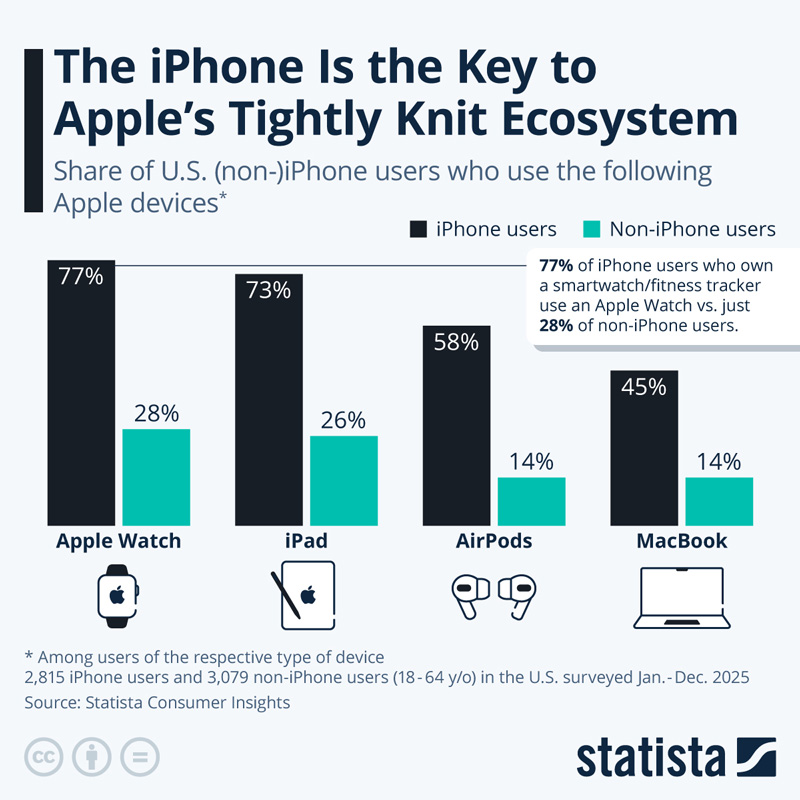
- iPhone acts as the central hub of Apple’s ecosystem, with significantly higher adoption of other Apple devices among iPhone users compared to non-iPhone users.
- Apple Watch shows the strongest ecosystem lock-in, with 77% of iPhone users owning one versus only 28% of non-iPhone users.
- iPad ownership remains highly skewed, as 73% of iPhone users use an iPad compared to just 26% of non-iPhone users.
- AirPods adoption highlights accessory dependency, with 58% of iPhone users using them versus only 14% of non-iPhone users.
- MacBook penetration also reflects ecosystem preference, with 45% of iPhone users owning one compared to 14% of non-iPhone users.
- Across all categories, iPhone users are 2x to 4x more likely to use other Apple devices than non-iPhone users.
- The data indicate strong cross-device integration effects, where owning an iPhone increases the likelihood of purchasing complementary Apple products.
- Wearables and accessories (Apple Watch, AirPods) show the largest adoption gaps, reinforcing Apple’s strategy of deep hardware–software integration.
- Overall, the ecosystem demonstrates high customer stickiness and switching costs, making it difficult for users to leave once they adopt multiple Apple devices.
Key Numbers on Apple Ecosystem Size and Reach
- Apple’s global installed base exceeds 2 billion active devices.
- There are 1.56 billion iPhone users globally in 2025.
- The U.S. alone has over 155 million iPhone users.
- Apple generated $390.8 billion in revenue in 2024.
- The iPhone contributes 51% of Apple’s total revenue.
- Apple services account for 24% of total revenue, reflecting ecosystem monetization.
- App Store global revenue is projected to hit $185 billion in 2025.
- Apple Music has 93 million subscribers, while Apple TV+ has 47 million users.
- The App Store ecosystem generated $138 billion+ in global spending (2025).
iPhone Market Share and Platform Stickiness
- iOS holds 27.11% global smartphone market share in 2025.
- In the U.S., iOS leads with 57.97% market share, outperforming Android.
- Apple reached 69% U.S. share in Q4 2025, a record high.
- Around 71% of the global population uses smartphones, intensifying platform competition.
- Apple dominates premium smartphone segments, driving higher ecosystem stickiness.
- iPhone users show 18% higher loyalty than Android users.
- Apple controls over 50% of the U.S. smartphone market, according to some estimates.
- eSIM adoption reached 50% of connections in North America by 2025, led by Apple.
iPhone Customer Loyalty and Retention Rates
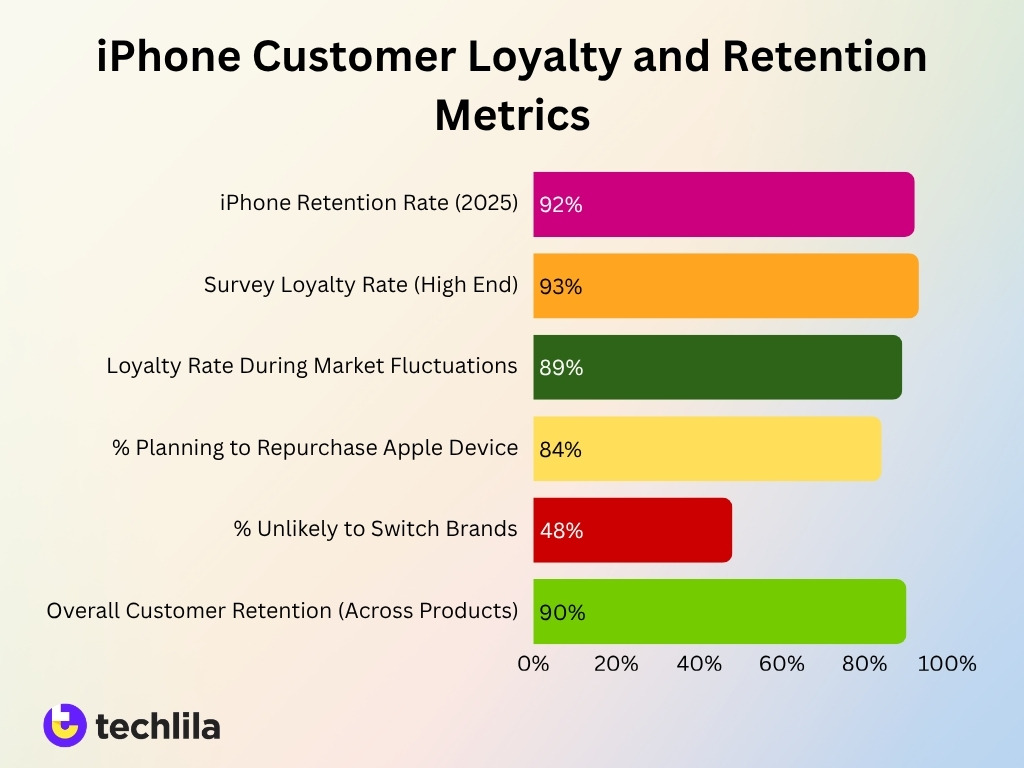
- Apple’s iPhone retention rate stands at 92% in 2025.
- Some reports show loyalty as high as 93% in surveys, reinforcing consistency.
- Apple maintains an 89% loyalty rate even during market fluctuations.
- Around 84% of iPhone users plan to repurchase another Apple device.
- Approximately 48% of users say they are unlikely to switch brands.
- Apple’s trade-in loyalty rate stands at 74.6%, encouraging upgrades within the ecosystem.
- iPhone loyalty consistently ranges between 85% and 92% globally.
- Apple’s overall customer retention across products exceeds 90%, driven by ecosystem integration.
Role of Hardware–Software Integration in Ecosystem Lock-In
- Apple controls both hardware and software, unlike Android OEMs, enabling tighter ecosystem integration.
- Seamless features like Handoff and AirDrop increase user retention by 15–20%.
- Apple Silicon (M-series chips) improved performance efficiency by 30–40% vs prior Intel models.
- Over 90% of Apple users update to the latest iOS versions within a year, ensuring ecosystem consistency.
- Apple’s vertical integration reduces fragmentation compared to Android’s 24,000+ device variations.
- Cross-device continuity boosts productivity usage by 25% among Apple users.
- Apple’s ecosystem design contributes to Net Promoter Scores above 60, higher than most competitors.
- Integrated chips and OS reduce app crashes by 50% compared to fragmented systems.
App Store Scale, Revenue, and Developer Dependence on Apple
- The App Store hosts over 1.8 million apps in 2025.
- Apple paid developers $60 billion in 2024 alone, up from $50 billion in 2023.
- Since launch, developers have earned $550+ billion globally.
- App Store gross revenue is projected to exceed $185 billion in 2025.
- Apple takes a 15–30% commission on app transactions.
- Over 650 million weekly visitors browse the App Store.
- Top developers earn 70%+ of revenue from iOS vs Android in premium apps.
- Subscription apps account for 75% of App Store revenue growth.
- Small developers (earning under $1M) benefit from reduced 15% commission rates.
Multi-Device Ownership Within the Apple Ecosystem
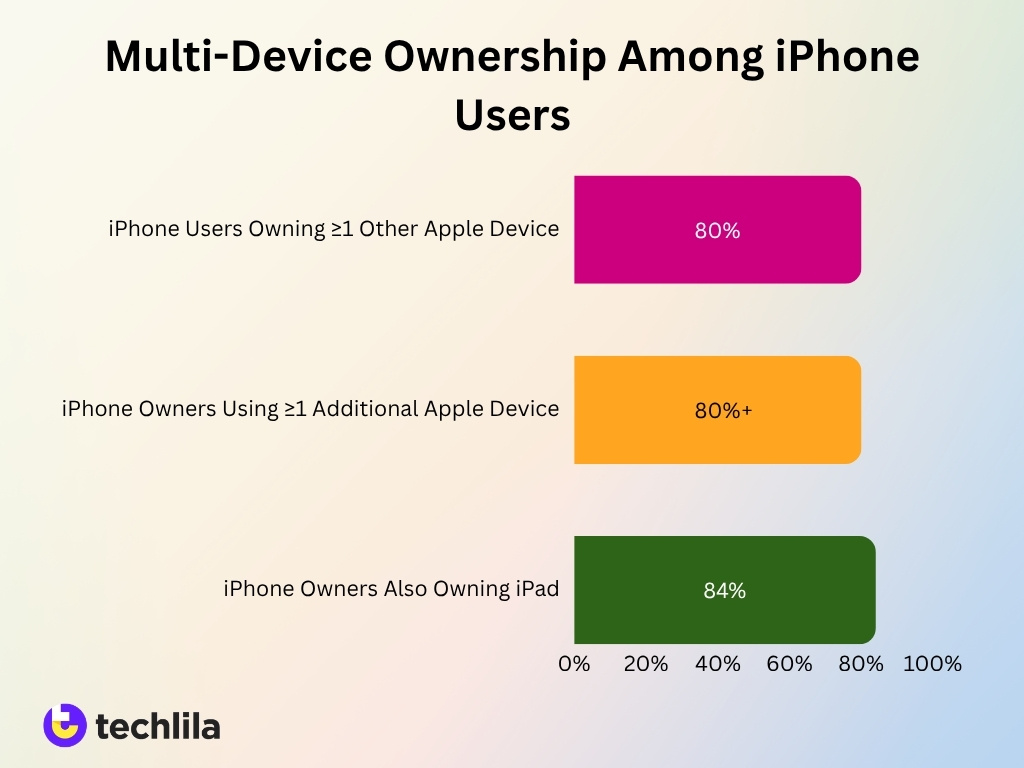
- Around 80% of iPhone users own at least one other Apple device (iPad, Mac, or Apple Watch), underscoring deep multi‑device engagement within the ecosystem.
- Surveys indicate over 80% of iPhone owners globally use at least one additional Apple device, significantly boosting cross‑device feature usage like Handoff and AirDrop.
- U.S. homes now average 2.4 Apple devices per household, up from 1.8 three years earlier, reflecting roughly 31% growth in multi‑device ownership.
- As of early 2026, Apple supports 2.5 billion active devices worldwide, with over 1.2 billion active iPhones anchoring its multi‑device ecosystem.
- Statista data shows 77% of iPhone users who own a smartwatch or fitness tracker choose an Apple Watch, highlighting strong intra‑ecosystem loyalty.
- Among iPhone users with audio accessories, more than half of the Bluetooth earbuds owned are AirPods, reinforcing Apple’s multi‑device audio lock‑in.
- A survey found 84% of iPhone owners also own an iPad, signaling a strong tablet–smartphone pairing inside Apple’s ecosystem.
- U.S. smartwatch market data shows Apple holding a 56% share, with nearly 80% of smartwatch users who have an iPhone choosing Apple Watch.
- Apple’s active device base grew from 2.35 billion in 2025 to 2.5 billion in 2026, adding about 150 million devices and deepening multi‑device penetration.
iCloud Usage, Storage Growth, and Data Lock-In Effects
- iCloud has 850 million+ active users globally.
- Over 50% of Apple users pay for iCloud storage upgrades.
- Average iCloud storage per user increased to 50–200 GB in 2025.
- iCloud backups increase switching friction by 30–40% due to data migration challenges.
- Apple Photos stores trillions of images and videos globally, anchoring users in the ecosystem.
- iCloud Drive adoption among Mac users exceeds 70%.
- Paid iCloud plans generate billions annually in recurring revenue.
- Data lock-in increases retention rates by 10–15% for cloud-dependent users.
- iCloud integrates across iPhone, iPad, Mac, and Apple Watch, reinforcing ecosystem stickiness.
Adoption of iMessage, FaceTime, and Other Exclusive Apple Services
- iMessage has approximately 1 billion monthly active users, with an estimated 8.4 billion messages shared daily.
- 88% of U.S. teenagers own an iPhone, and 88% intend to purchase an iPhone as their next device, representing near record-high adoption rates among younger users.
- FaceTime is used by over 1 billion Apple users worldwide, demonstrating extensive reach across the Apple ecosystem.
- Apple Pay has reached an estimated 818 million users globally as of 2025, with 90% of mobile wallet users preferring Apple Pay due to ease of use.
- Blue bubble vs. green bubble dynamics create measurable social pressure, with young people reporting peer pressure to own iPhones to ensure messages appear in blue rather than green bubbles.
- Apple’s services revenue reached $109.16 billion in fiscal 2025, representing a 13.5% increase from 2024, reflecting unprecedented growth across messaging, payments, and subscription services.
- Apple Pay accounted for 10.2% of in-store U.S. transactions in 2025, up 14.6% from 2024, demonstrating accelerating adoption in retail commerce.
- The App Store averaged over 850 million weekly users globally in 2025, with developers earning over $550 billion cumulatively since 2008.
- iMessage users spend an average of 1 hour and 36 minutes per day messaging on the platform, indicating strong daily engagement and service dependency.
Apple Watch, AirPods, and Other Accessory Attach Rates
- Apple Watch has 100 million active users globally.
- Around 35% of iPhone users own an Apple Watch.
- AirPods shipments exceeded 100 million units annually.
- Over 60% of U.S. iPhone users own AirPods or Beats devices.
- Apple dominates the smartwatch market with 30% global share in 2025.
- Wearables revenue reached $40+ billion annually, reflecting ecosystem expansion.
- Accessory users are 70% less likely to switch platforms.
- Apple Watch users show higher health app engagement rates (2x vs non-users).
- AirPods integration with iOS increases usage frequency by 25–30% vs third-party earbuds.
Average Revenue Per User Across Apple Devices and Services
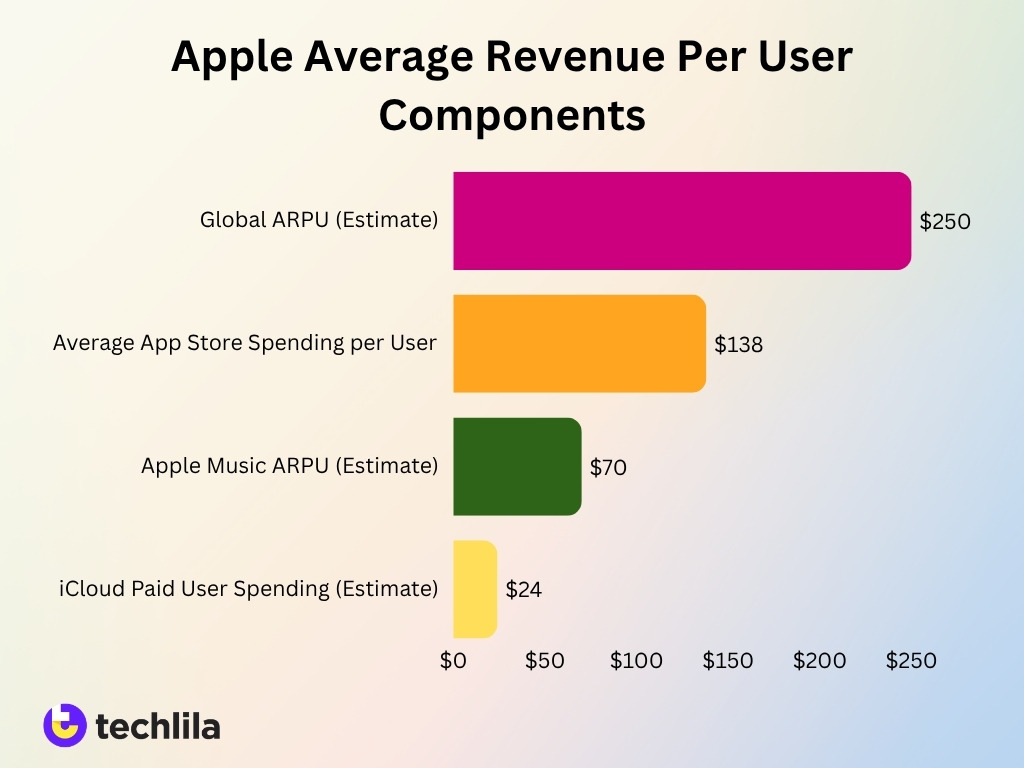
- Apple’s global ARPU is estimated at $240–$260 annually per user in 2025.
- Services ARPU grew by 11% year-over-year in 2025, driven by subscriptions.
- Apple users spend 2–3x more on apps and services than Android users.
- Average App Store spending per user reached $138 annually in 2025.
- Apple’s services revenue hit $96 billion in 2024, up from $85 billion in 2023.
- Apple Music ARPU is estimated at $60–$80 per subscriber annually.
- iCloud paid users spend an average of $12–$36 per year on storage upgrades.
- Apple One bundle increases ARPU by 20–30% per user.
- Users with multiple subscriptions spend 40% more annually than single-service users.
Services and Subscription Bundles Strengthening Lock-In
- Apple surpassed 1 billion paid subscriptions in 2025, up from 975 million in 2024.
- Apple One bundles can save users $6–$25 per month, encouraging multi-service adoption.
- Over 70% of Apple users subscribe to at least one paid service, such as iCloud+ or Apple Music.
- Apple’s services revenue reached $96 billion in 2024, growing by double digits YoY.
- Apple TV+ saw subscriber growth of 15% year-over-year in 2025.
- Bundled users show 30% higher retention rates compared to single-service users.
- Apple Arcade and Fitness+ adoption increased by 20% in 2025, driven by bundling.
- Subscription-based revenue now contributes 24% of Apple’s total revenue, reinforcing recurring income.
- Users with Apple One bundles spend 40% more annually than non-bundle users.
Cross-Device Features That Increase Switching Costs
- Features like AirDrop and Handoff reduce friction and increase retention by 15–20%.
- Universal Clipboard usage increased productivity efficiency by 25% among Apple users.
- Apple Continuity features are used by 60% of multi-device users daily.
- Cross-device syncing reduces switching intent by 20–30%.
- Apple ID integration connects all devices under a single identity, reinforcing dependency.
- iCloud Keychain usage increased password retention and reduced switching likelihood by 18%.
- AirPlay and HomeKit integration expanded smart home lock-in by 25% adoption growth in 2025.
- Apple’s ecosystem continuity contributes to 90%+ customer satisfaction rates.
Financial Cost of Leaving the Apple Ecosystem for Rival Platforms
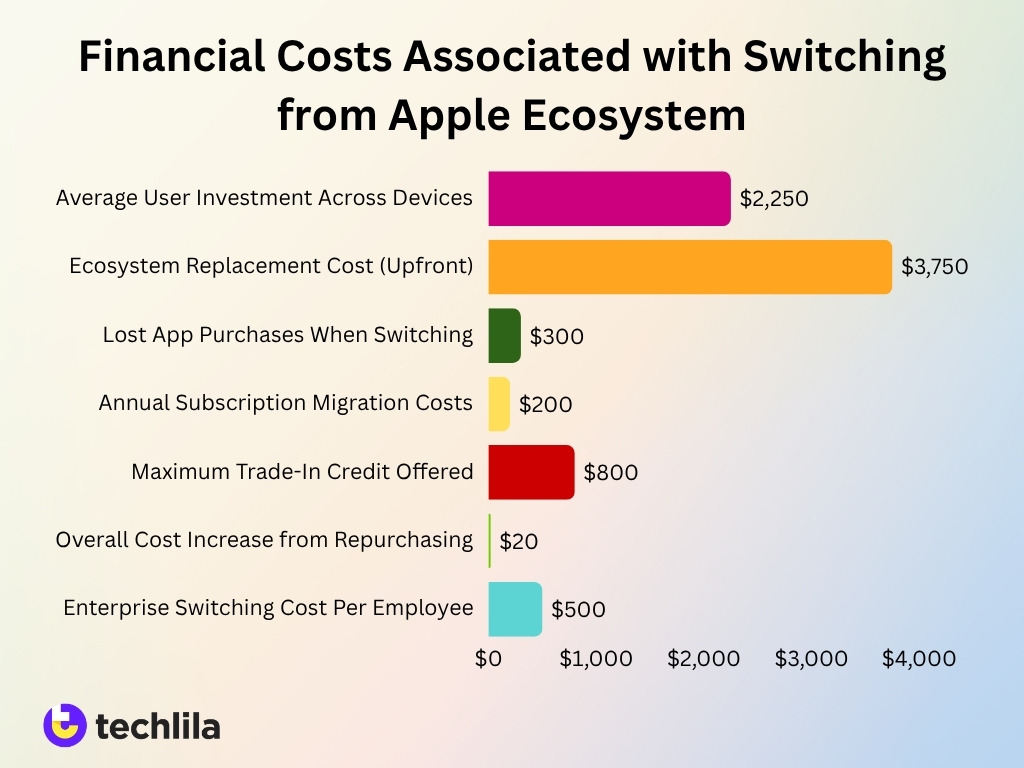
- The average Apple user invests $1,000–$3,500 across devices, increasing switching costs.
- Replacing an Apple ecosystem (iPhone, Mac, Watch, AirPods) can cost $2,500–$5,000+ upfront.
- Users may lose paid app purchases worth $100–$500 when switching platforms.
- Subscription migration costs (music, cloud storage) can add $100–$300 annually.
- Trade-in programs reduce switching by offering up to $800 credit, keeping users within Apple.
- Apple accessories (AirPods, Watch) lose full functionality outside iOS, reducing resale value by 20–30%.
- Switching ecosystems may require repurchasing apps and services, increasing costs by 15–25% overall.
- Enterprise users face higher switching costs ($500+ per employee) due to ecosystem dependencies.
Time and Effort Required to Switch Away from Apple Devices and Services
- Data migration, including photos, messages, and personal files, requires an average of 5–20 hours, depending on total storage size and number of files involved.
- iPhone users switching to Android experience approximately 30% greater friction during the data transfer process compared to Android to iOS migrations.
- 92% of iPhone users remain loyal to their devices due to ecosystem integration, indicating strong switching resistance among existing users.
- Transferring iMessage history to Android devices is extremely difficult, as Apple does not provide native cross-platform compatibility, making this a primary barrier for U.S. users.
- Purchasing and setting up replacement apps on a new operating system takes between 3-10 hours on average for users with typical app libraries.
- Reconfiguring iCloud backups, file syncing, and cloud storage credentials adds 2–5 hours to the total switching process.
- Learning a new operating system interface increases onboarding friction by approximately 20–30% for users switching from iOS to Android or vice versa.
- Business and professional users report experiencing 1–2 days of productivity loss during complete platform migration, including data transfer and workflow reconfiguration.
- 79% of employees report their companies have not implemented steps to reduce tool and platform switching friction, indicating systemic switching costs.
Psychological and Social Factors Reinforcing Apple Ecosystem Loyalty
- Apple maintains a Net Promoter Score of 61 in 2025, surpassing the tech industry average of 58 and signaling strong brand advocacy.
- 88% of U.S. teens own an iPhone in 2025, up 3% from the prior year, fueled by social norms.
- Blue bubbles in iMessage create peer pressure and bullying for Android users, boosting Apple device choice among youth.
- Apple ranks #1 in Interbrand’s 2025 Best Global Brands with a $470.9 billion valuation, topping Microsoft and Amazon.
- Apple’s iPhone retention rate hits 92% in 2025, with 90%+ of users upgrading within the ecosystem.
- Apple users exhibit 93% retention, 2.3x higher than Android’s 80%, due to deep emotional brand bonds.
- Ecosystem lock-in yields a 15-20% switching cost advantage, with multi-device owners showing 87% lower switch rates.
- Apple’s privacy focus drives 98% teen satisfaction, enhancing trust by positioning it as a premium, reliable leader.
Apple vs Android Retention, Switching, and Churn Benchmarks
- iOS loyalty reached an all-time high of 94% compared to Android’s 91% globally.
- 18% of new iPhone buyers in the US were previous Android owners, a jump from 11% in 2022.
- Android has an 89–91% customer retention rate while iPhone’s retention rate ranges from 85–88%.
- 47% of former Android users cite better user experience as the reason for switching to iPhone.
- 29% of former iPhone users switched to Android primarily because it was more affordable.
- Android dominates the global smartphone market share with 70.75% compared to iOS at 29.25%.
- App Store generates 2.2x higher revenue ($80 billion in H1 2026) than Google Play Store ($36 billion).
- iPhone users spend an average of $140 annually on apps compared to $69 for Android users.
- iOS devices account for only 1% of mobile malware incidents globally, while Android comprises 98%.
Frequently Asked Questions (FAQs)
Apple’s iPhone customer retention rate is approximately 92% as of 2025, significantly higher than its competitors’.
Apple’s ecosystem includes around 2.3–2.35 billion active devices worldwide in 2025–2026.
The Apple App Store records over 850 million weekly active users globally.
Apple’s ecosystem creates a 15–20% higher switching cost advantage per additional device owned.
Conclusion
Apple’s ecosystem lock-in is not a single feature, but a carefully layered system built on devices, services, and user behavior. The statistics reveal how high retention rates, multi-device ownership, and subscription growth combine to create a powerful feedback loop that keeps users within the ecosystem. Moreover, financial costs, time investment, and even social factors make switching increasingly difficult, reinforcing long-term loyalty. For businesses, Apple’s strategy highlights the value of integration, recurring revenue models, and seamless user experiences in building durable customer relationships.
For consumers, it explains why convenience often outweighs flexibility when choosing a platform. As competition between ecosystems intensifies, Apple’s approach sets a benchmark for how technology companies can turn user experience into sustained growth and market dominance.

Leave a comment
Have something to say about this article? Add your comment and start the discussion.