



The current Android version is Android 17, released in June 2026 with API level 37 and the internal codename Cinnamon Bun. The full Android versions list runs from Android 1.0 in September 2008 through the dessert-named releases, Cupcake to Pie, and on to the numbered ones, Android 10 through 17. Every name, number, API level and release month below comes from Google’s own developer references rather than memory, and this Android version names list is the fastest way to answer the question most people arrive with: which Android version has which name.
Changelog: updated September 2026 with Android 15, 16 and 17 and two corrected dates. Read more
- Current as of September 2026. Three releases have shipped since this page last stopped at Android 14, and each now has its own section: Android 15, Android 16 and Android 17.
- Android 14 shipped in October 2023, not 2025 as the previous version said.
- Ice Cream Sandwich arrived in October 2011, not February.
- Every section image was replaced, and the version lineup graphic was redrawn with release months.
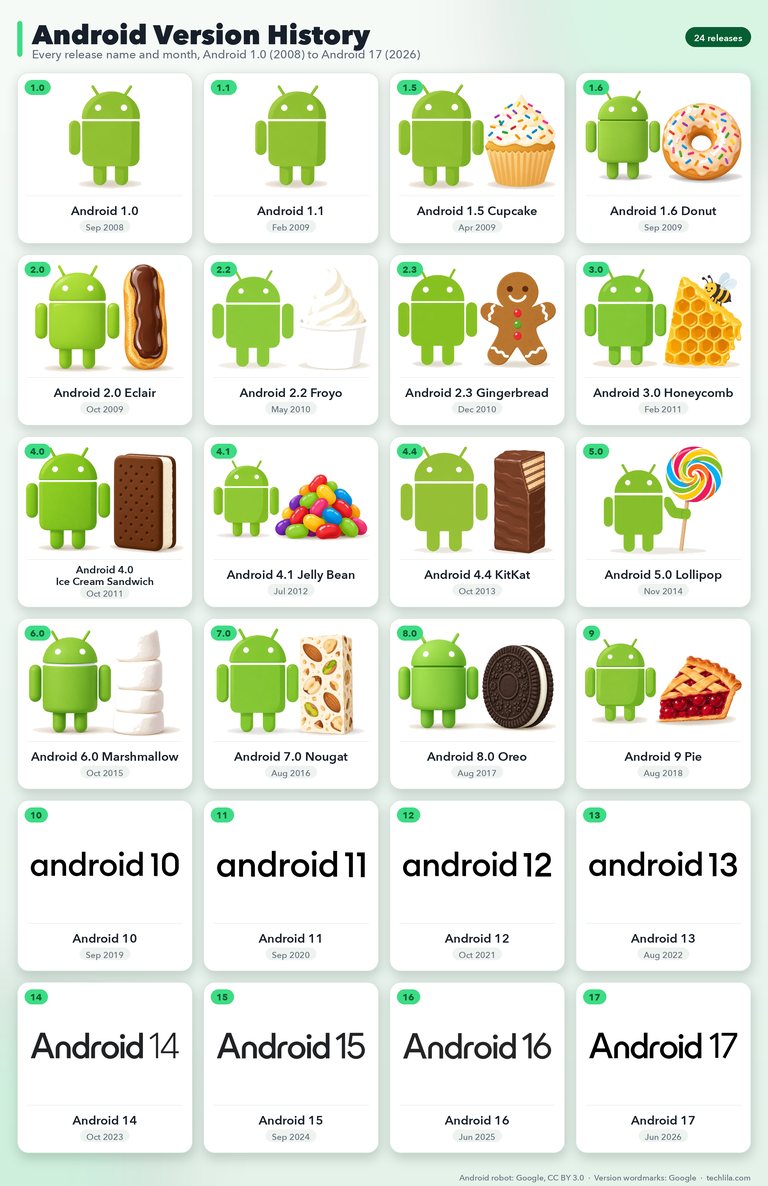
Android Version Name List: 1.0 to Android 17
This Android version list pairs every name with its number. Release months and the public names come from the VERSION_CODES reference that Google maintains for developers, which records when each version was “released publicly”, and API levels from the same page and the SDK release notes. Where Google stopped using dessert names in public, the internal codename is the one its own constant carries.
Version | Name | API level | Released |
|---|---|---|---|
Android 1.0 | No public name | 1 | September 2008 |
Android 1.1 | No public name | 2 | February 2009 |
Android 1.5 | Cupcake | 3 | April 2009 |
Android 1.6 | Donut | 4 | September 2009 |
Android 2.0 to 2.1 | Eclair | 5 to 7 | October 2009 |
Android 2.2 | Froyo | 8 | May 2010 |
Android 2.3 | Gingerbread | 9 to 10 | December 2010 |
Android 3.0 to 3.2 | Honeycomb | 11 to 13 | February 2011 |
Android 4.0 | Ice Cream Sandwich | 14 to 15 | October 2011 |
Android 4.1 to 4.3 | Jelly Bean | 16 to 18 | July 2012 |
Android 4.4 | KitKat | 19 to 20 | October 2013 |
Android 5.0 to 5.1 | Lollipop | 21 to 22 | November 2014 |
Android 6.0 | Marshmallow | 23 | October 2015 |
Android 7.0 to 7.1 | Nougat | 24 to 25 | August 2016 |
Android 8.0 to 8.1 | Oreo | 26 to 27 | August 2017 |
Android 9 | Pie | 28 | August 2018 |
Android 10 | Android 10 (codename Q) | 29 | September 2019 |
Android 11 | Android 11 (codename R) | 30 | September 2020 |
Android 12 and 12L | Android 12 (codename S) | 31 to 32 | October 2021 |
Android 13 | Android 13 (codename Tiramisu) | 33 | August 2022 |
Android 14 | Android 14 (codename Upside Down Cake) | 34 | October 2023 |
Android 15 | Android 15 (codename Vanilla Ice Cream) | 35 | September 2024 to AOSP |
Android 16 | Android 16 (codename Baklava) | 36 | June 2025 |
Android 17 | Android 17 (codename Cinnamon Bun) | 37 | June 2026 |
Source: Google, Build.VERSION_CODES reference and SDK Platform release notes on developer.android.com; Android Developers Blog release announcements for 1.0, 1.1, 1.5, 1.6, 2.0, 2.2, 15, 16 and 17. Read September 2026.
How Android Versions Are Named
From Cupcake in 2009 to Pie in 2018, Google named every release after a dessert, in alphabetical order, and put the name on the box. With Android 10 in 2019 the public name became the number, and the desserts moved inside: Google’s own developer constants still call Android 13 Tiramisu, Android 14 Upside Down Cake, Android 15 Vanilla Ice Cream, Android 16 Baklava and Android 17 Cinnamon Bun. The jump from V to B is not a typo.
In 2024, Android Authority reported that Google restarted the lettering with Baklava to match a change in how Android builds are numbered, so Android 17’s C follows 16’s B.
The API level is the number developers care about. It goes up by one with each major release, so “API level 37” and “Android 17” describe the same platform, and an app that targets API 35 was built against Android 15. The table above pairs them so either number leads you to the right name.
Android Version History, Release by Release
The platform began as a company, Android Inc., founded by Andy Rubin after his earlier firm Danger built the Hiptop, later sold as the Sidekick. Google bought Android Inc. in 2005 and shipped the first Android phone, the T-Mobile G1, in 2008, with a 528 MHz processor, 192 MB of RAM and a 3.2-inch screen. Everything below builds on that phone.
1. Android 1.0 and 1.1
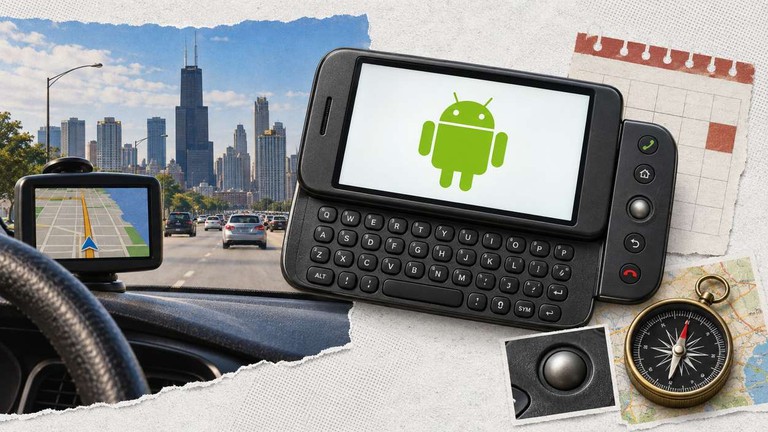
The first release shipped on the G1 in September 2008 as Android 1.0, and Google’s developer blog announced the Android 1.1 SDK in February 2009. Neither carried a public name. The pieces that still define the platform were already there: the Android Market for apps, a WebKit browser, Gmail and contact syncing with a Google account, and Google Maps with GPS.
2. Android 1.5 Cupcake

Cupcake, released in April 2009, started the dessert names and the first big consumer update. Google’s announcement post listed the on-screen keyboard, home-screen widgets, video recording with direct upload to YouTube, and copy and paste in the browser. The soft keyboard mattered most: it made phones without a physical keyboard possible.
3. Android 1.6 Donut

Donut followed in September 2009. Its SDK announcement named support for more screen resolutions, which opened the door to phones of different sizes, new telephony APIs for CDMA networks, which brought Android to Verizon and Sprint in the United States, gesture APIs, a text-to-speech engine, and the Quick Search Box for searching the phone and the web at once.
4. Android 2.0 and 2.1 Eclair

Eclair arrived in October 2009, one month after Donut, and Android 2.1 followed in early 2010 as a maintenance release. Google’s SDK post highlighted the new sync and account APIs that let the phone hold several accounts and contact sources at once, and a Bluetooth API for peer-to-peer apps. Users noticed multi-touch, a redesigned browser, and a unified inbox.
5. Android 2.2 Froyo
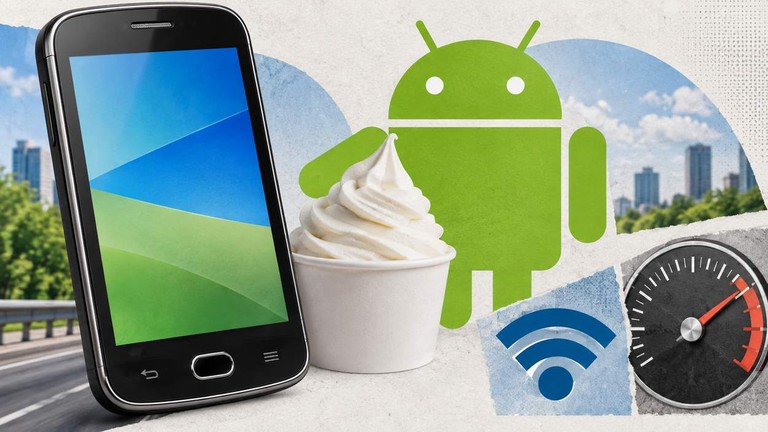
Froyo, short for frozen yogurt, was announced at Google I/O in May 2010. The developer post led with speed: a just-in-time compiler for Dalvik and the V8 JavaScript engine in the browser. For users the headline was the portable Wi-Fi hotspot, alongside Flash support in the browser, cloud backup of settings, and better Bluetooth for car docks.
6. Android 2.3 Gingerbread
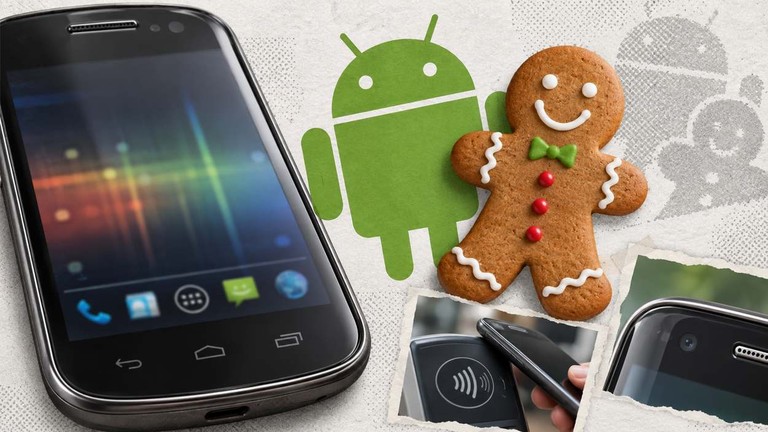
Gingerbread shipped in December 2010 and stayed on budget phones for years. It added NFC, SIP calling over the internet, a front-camera path for video calls, a download manager, and a darker interface that Google said helped battery life on the AMOLED screens of the time. The keyboard gained a cursor for copy and paste.
7. Android 3.0 to 3.2 Honeycomb

Honeycomb, released in February 2011, was built for tablets and never shipped on phones, which makes it the release most people skip. It introduced the on-screen navigation buttons that replaced hardware keys, tabbed browsing, larger widgets, and redesigned Gmail and YouTube apps for big screens. Its ideas folded into the next release.
8. Android 4.0 Ice Cream Sandwich
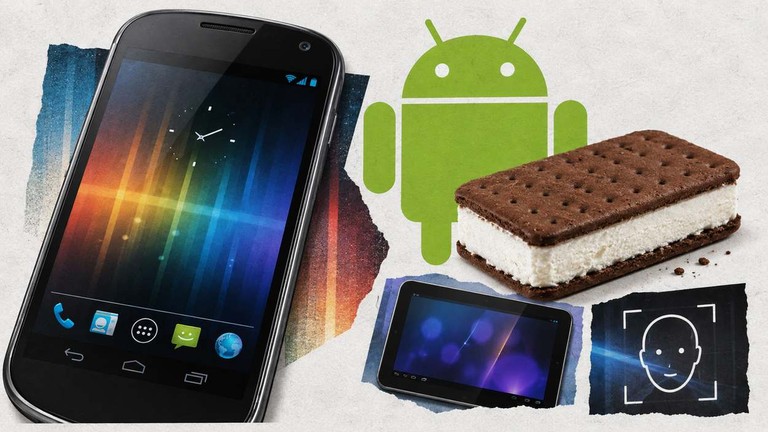
Ice Cream Sandwich, released in October 2011 on the Galaxy Nexus, merged the phone and tablet lines and gave Android its first coherent design, Holo. It brought face unlock, a data-usage monitor, resizable widgets, and the swipe-to-dismiss notifications that every phone uses today. The previous version of this page dated it to February 2011; Google’s record says October.
9. Android 4.1 to 4.3 Jelly Bean
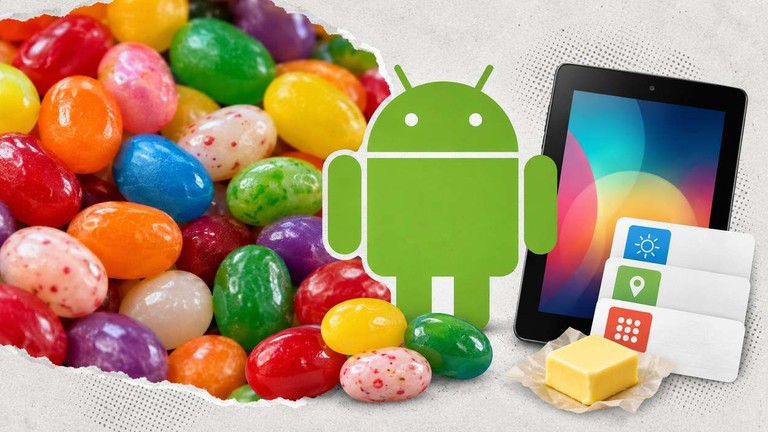
Jelly Bean spanned three releases from July 2012 to 2013 and is remembered for Project Butter, the work that made scrolling and animation run at a steady frame rate. It also introduced Google Now, the card-based assistant, expandable notifications, and, in 4.2 and 4.3, multiple user accounts on tablets and Bluetooth Low Energy support.
10. Android 4.4 KitKat

KitKat, released in October 2013, was the one dessert name licensed from a brand. Its work was under the surface: Project Svelte cut memory use so the release ran on phones with 512 MB of RAM. Visible changes included immersive full-screen mode, a translucent status bar, a new dialer with caller ID, the emoji keyboard, and Hangouts taking over SMS.
11. Android 5.0 and 5.1 Lollipop
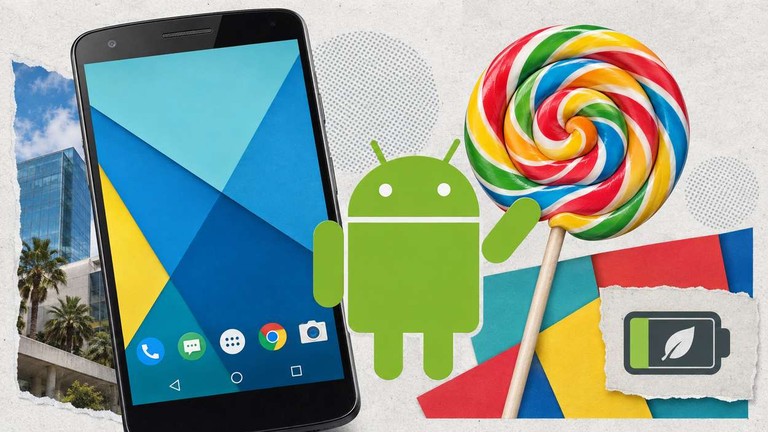
Lollipop, released in November 2014, introduced Material Design, the layered, colorful design language Google then rolled across all of its products. It also replaced the Dalvik runtime with ART, added the Battery Saver mode, lock-screen notifications, Smart Lock, guest mode and app pinning.
12. Android 6.0 Marshmallow
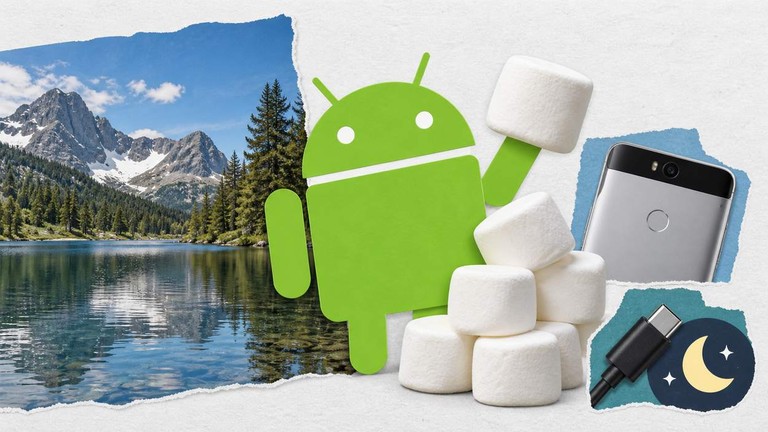
Marshmallow, released in October 2015, polished Lollipop rather than redrawing it. Its lasting changes were runtime permissions, so apps ask for the camera or location when they need it instead of at install, Doze for standby battery life, native fingerprint support, Android Pay, and Now on Tap.
13. Android 7.0 and 7.1 Nougat
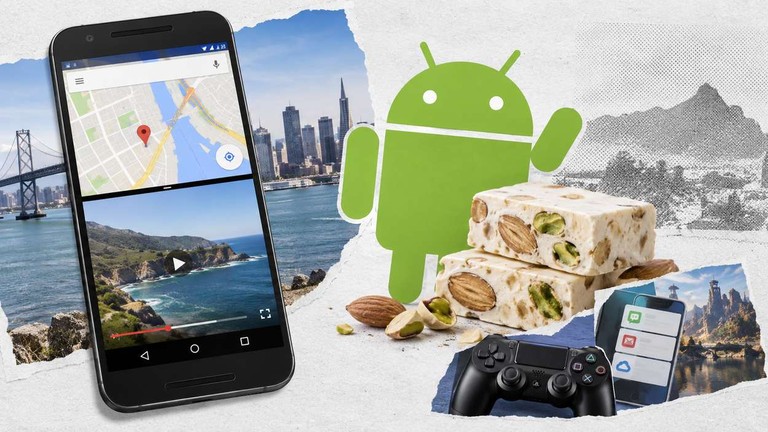
Nougat, released in August 2016 after a developer preview that began in March, brought split-screen multitasking, direct reply from notifications, bundled notifications, a Doze that worked while the phone moved, and customizable quick-settings tiles. The 7.1 update added app shortcuts on long press.
14. Android 8.0 and 8.1 Oreo
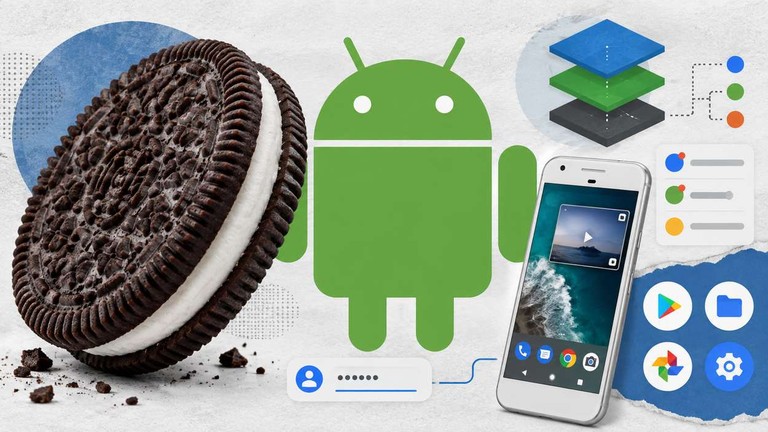
Oreo, released in August 2017, was the second brand-named dessert. It introduced picture-in-picture for phones, notification dots and channels, adaptive icons, autofill for passwords, stricter limits on background apps, and Project Treble, the change to Android’s internals that made it easier for manufacturers to ship updates. Our Oreo vs Nougat piece covers the rest.
15. Android 9 Pie
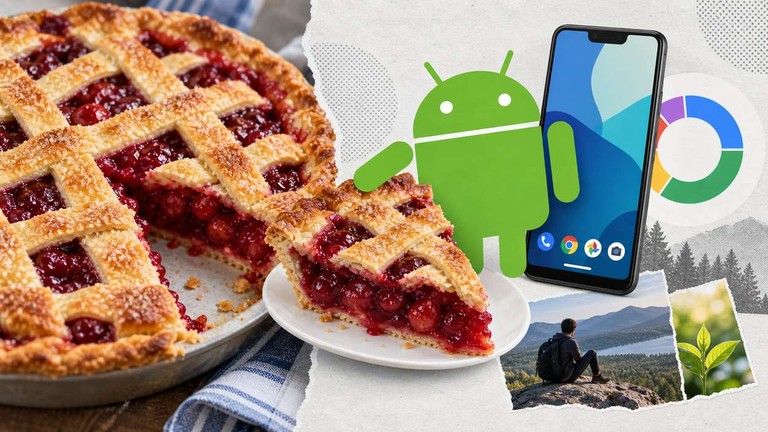
Pie, released in August 2018, was the last public dessert name. It introduced gesture navigation with the pill-shaped home button, Adaptive Battery and Adaptive Brightness, which learn from how you use the phone, App Actions and Slices for surfacing tasks in search, and the first Digital Wellbeing dashboard for tracking screen time.
16. Android 10
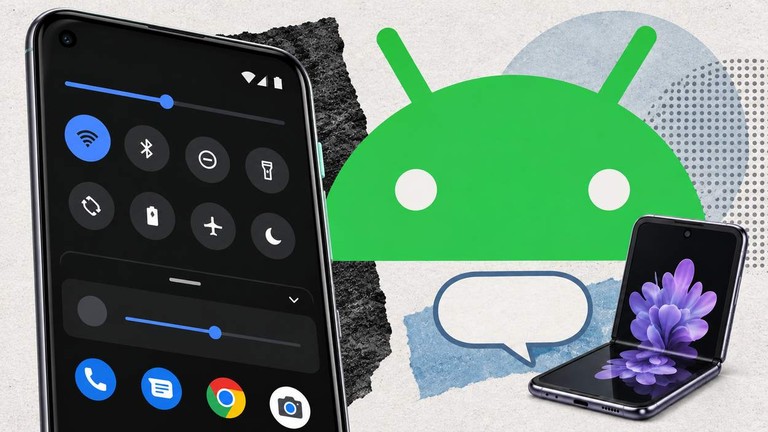
Released in September 2019, Android 10 dropped the dessert branding in public while keeping Q as its developer codename. It brought the system-wide dark theme, full gesture navigation without a home button, a Privacy section in Settings with finer location controls, Live Caption, Smart Reply inside notifications, Focus Mode in Digital Wellbeing, and Project Mainline, which delivers some security updates through Google Play instead of a full system update.
17. Android 11
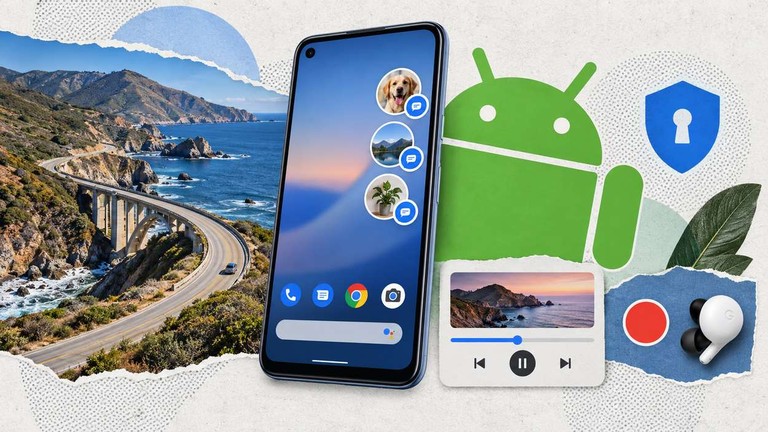
Codename R, released in September 2020, became Android 11. Its name is just the number; the search “Android 11 name” has no dessert answer. It grouped conversations at the top of the notification shade, added chat Bubbles, a built-in screen recorder, one-time permissions for camera, microphone and location, automatic permission reset for unused apps, and device controls for smart-home gear behind the power button.
18. Android 12 and 12L
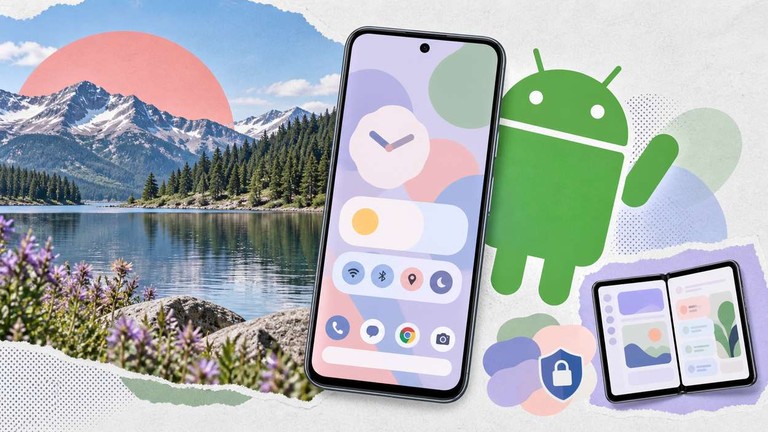
Codename S arrived as Android 12 in October 2021 alongside the Pixel 6. Material You let the interface take its colors from your wallpaper, the biggest visual change since Lollipop. It also added the Privacy Dashboard, camera and microphone indicators and toggles, scrolling screenshots, and the Private Compute Core for on-device processing. A tablet-focused 12L release, API level 32, followed in 2022 with layouts for tablets and foldables.
19. Android 13
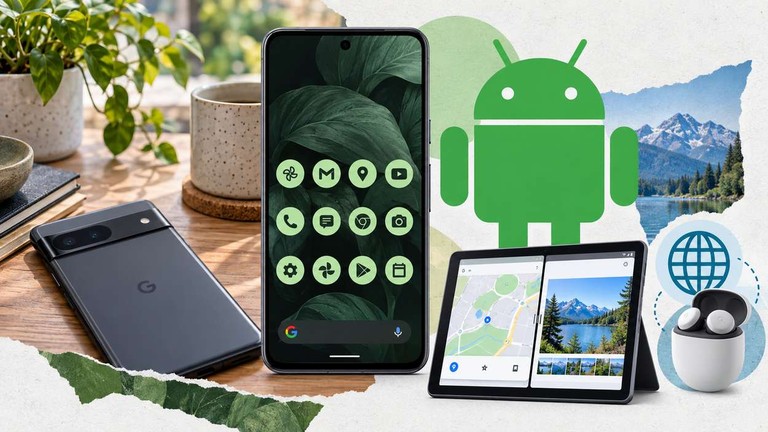
Tiramisu, the codename behind Android 13, shipped in August 2022 and refined Android 12 rather than replacing it. Per-app language settings, a notification permission that apps must request, themed icons, a clipboard editor, spatial audio on supported hardware, and a stronger push into tablets with better split-screen and a taskbar were the headline additions. The Pixel 7 shipped with it.
20. Android 14

Upside Down Cake became Android 14 in October 2023, two years earlier than the previous version of this page claimed. It focused on personalization: lock-screen clocks and shortcuts, generated wallpapers on Pixel phones, and larger fonts with better scaling. It also let you use the phone as a webcam over USB, tightened which photos an app may see, and added Health Connect to the system.
21. Android 15
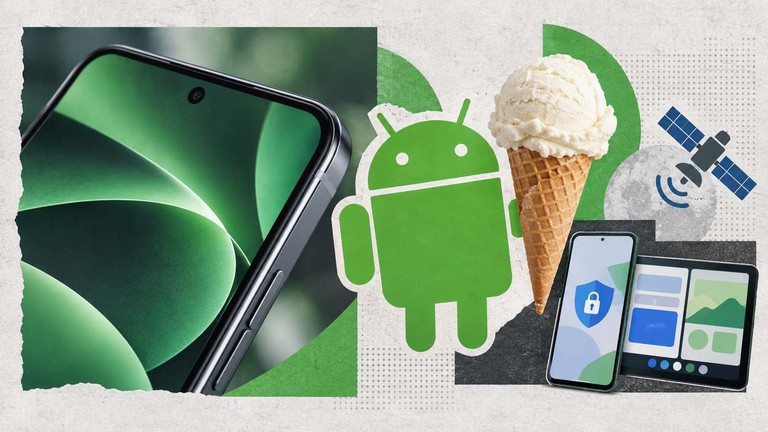
Vanilla Ice Cream became Android 15 when Google released it to the Android Open Source Project in September 2024, with Pixel phones updated in the following weeks and Samsung, OnePlus, Xiaomi and others in the months after, per the announcement.
For users the standout was the private space, a separate locked area for sensitive apps. Google’s post also covered theft detection, better foldable and tablet layouts, foreground-service limits to protect battery life, support for Braille displays over USB and Bluetooth, and the groundwork for 16 KB memory pages that speeds up app launches on newer devices.
22. Android 16

Baklava, the codename for Android 16, was released in June 2025 and reached most supported Pixel phones the same day, per Google’s announcement. Google’s announcement listed live-updating progress notifications for things like deliveries and rides, professional camera controls including night-mode scene detection and hybrid auto exposure, a photo picker that can search cloud media, outline text for accessibility, and a developer preview of a desktop windowing mode for connected displays. It was the only 2025 release with app-affecting behavior changes.
23. Android 17

Cinnamon Bun, API level 37, became Android 17 in June 2026 and is the current version. Google’s announcement frames it as the start of a shift from an operating system to an “intelligence system” and makes large-screen resizability mandatory for apps, so the same app must work on phones, foldables, tablets and desktop windows.
User-facing changes include app bubbles on every form factor with a Bubble Bar on tablets, an interactive picture-in-picture for desktop mode, handoff suggestions that let a tablet resume the app you just used on your phone, a system-level contact picker, and new camera formats.
Android Versions FAQ
What is the latest Android version name?
The latest is Android 17, released in June 2026, API level 37, internal codename Cinnamon Bun. Most phones sold in 2025 and early 2026 run Android 16 from June 2025. The Android latest version name list, newest first, reads Android 17 Cinnamon Bun, Android 16 Baklava, Android 15 Vanilla Ice Cream.
What are all the Android version names in order?
Cupcake, Donut, Eclair, Froyo, Gingerbread, Honeycomb, Ice Cream Sandwich, Jelly Bean, KitKat, Lollipop, Marshmallow, Nougat, Oreo and Pie, then Android 10 through 17 by number. The two releases before Cupcake, 1.0 and 1.1, had no public names. For all Android version name lookups, the table above pairs each name with its number and API level.
What is the Android 11 name, or Android 12 name?
Just the numbers. Google stopped public dessert names at Android 9 Pie. Internally, Google’s developer reference labels Android 11 as R and Android 12 as S, and it resumed full dessert codenames with Tiramisu for Android 13.
How do I check which Android version my phone has?
Open Settings, then About phone, and look for Android version. On Samsung phones the entry sits under Software information. The same screen shows the security patch date, which matters as much as the version number.
What is an API level?
A whole number Google assigns to each platform release so that apps can declare which features they need. It rises by one per major version, from 1 for Android 1.0 to 37 for Android 17, with a few extra numbers for point releases such as Android 12L at 32.
Why did Android 16 get a codename starting with B?
Because Google restarted the alphabet. According to Android Authority’s reporting, Baklava reflects a change in how Android builds are numbered, which reset the lettering, and Android 17’s Cinnamon Bun continues from there rather than from Vanilla Ice Cream’s V.
Which Android Version Should You Be On?
The newest one your phone’s maker will give you. Since Android 10, the big changes have been about privacy and where apps may reach, so a phone stuck on Android 12 or 13 is missing controls, not just looks. The decision that outranks the version number is the security patch date on the same settings screen: a phone on Android 14 with this month’s patch is in better shape than one on Android 16 that stopped receiving updates.
If you are choosing a phone, check how many years of Android upgrades the maker promises, because that decides which of the versions above you will ever see. And if the dessert names are what brought you here, Google’s own developer reference still keeps them, one constant per release, from Cupcake to Cinnamon Bun. For the other side of the story, our iPhone OS evolution page traces iOS over the same years.

Tejwinder Singh
You just have shared very cool information. Most of the people are not aware of it and should know about different Android versions and their qualities. Anyway, I am on 11th number – Android 5.0 Lollipop.
Mahesh Dabade
Yes Tejwinder, agreed.
Sumeet
Excellent article about Android OS versions
Nicoli Redmayne
This is great and superb information about Android History, can you predict upcoming Android 9’s Name?
Gagan
Android 8.0 is awesome and added some really cool features.
Suraj Padmasali
I’m still using KitKat version on one of my phones.
Yogender singh
Really great and informative article. Thanks for sharing.
Akshat Abhishek
Very good and informative article . Now I know all about Android from beginning to the last one. Thank you for such information.
Robert Kendrick
Excellent List!! Thanks for sharing Android OS list. It is very informative and helpful.
Mahesh Dabade
We are glad you like the article :)
Jim
I am really glad I found this article, as it clears up a lot of things. My first Android was and is a 4.3 os and had no idea they were naming sweet things after the operating systems. I supposed that makes my phone is a jelly bean?
Mahesh Dabade
Yes Jim, its Jellybean :)