


iOS updates shape how users interact with their devices, influencing everything from security performance to app compatibility and battery efficiency. For businesses, adoption rates determine how quickly they can roll out new app features, while developers rely on these trends to decide which OS versions to support and optimize for. At the same time, enterprises use adoption data to plan security compliance and device management strategies across large fleets. With over 1.56 billion iPhone users globally, even small shifts in adoption behavior can impact millions of devices and digital experiences worldwide.
Understanding how quickly users transition to iOS 26 and what drives or delays that transition provides a clear view of Apple’s ecosystem strength and user behavior patterns. Let’s explore the full data behind iOS 26 adoption trends.
Editor’s Choice
- 66% of all iPhones were running iOS 26 within 5 months of release (Feb 2026).
- 74% of iPhones released in the last four years adopted iOS 26 in the same timeframe.
- iOS 26 reached 76% adoption pace slightly slower than iOS 18’s 76% at a comparable stage.
- Global market data shows iOS 26.2 alone held 48.88% share in Feb 2026.
- Combined iOS 26 adoption surged to 75.98% by Feb 2026 across tracked datasets.
- Adoption crossed 50% as early as January 2026, indicating strong early uptake.
- Over 80% of Apple users typically upgrade within months, reinforcing fast ecosystem adoption cycles.
Recent Developments
- Apple officially released iOS 26 on September 15, 2025, marking its latest major OS rollout.
- Within 3 weeks of launch, adoption jumped from under 5% to over 29%.
- By November 2025, adoption reached 40.5%, showing steady growth post-launch.
- Adoption accelerated in December 2025, crossing 55% globally.
- By early 2026, iOS 26 surpassed 75% adoption across tracked devices.
- Apple continued releasing iOS 18.x security updates alongside iOS 26, slowing migration slightly.
- Early reports suggested only 16% adoption after 4 months in some datasets, highlighting fragmentation in measurement methods.
- The update dropped support for older models like iPhone XR and XS, impacting upgrade eligibility.
Global iOS 26 Adoption Rate Overview
- iOS 26 runs on 66% of all active iPhones globally.
- Among newer devices (≤4 years old), adoption rises to 74%, showing stronger uptake on modern hardware.
- iPadOS 26 adoption reached 57% across all iPads, slightly trailing iPhones.
- Global smartphone OS share shows iOS holding 29.25% market share, supporting widespread adoption potential.
- iOS 26 versions dominate market share charts, with multiple subversions contributing significantly.
- Adoption trends show faster uptake compared to Android ecosystems, where fragmentation is higher.
- By early 2026, iOS 26 accounted for over 75% of tracked iOS usage clusters.
- Global adoption is driven by Apple’s long-term device support (up to 10 years).
iOS 26 Adoption Lags Behind Previous Versions
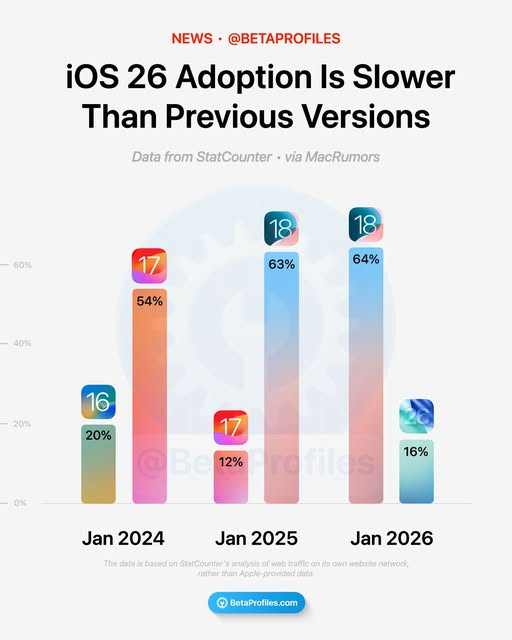
- iOS 26 reached only 16% adoption by January 2026, indicating a significantly slower uptake compared to prior iOS releases.
- In comparison, iOS 18 achieved 64% adoption in January 2026, highlighting a 4x higher adoption rate than iOS 26 in the same timeframe.
- Looking back, iOS 18 already had 63% adoption by January 2025, showing strong early momentum within just months of release.
- iOS 17 recorded 54% adoption in January 2024, demonstrating that earlier versions consistently crossed the 50% mark quickly.
- However, by January 2025, iOS 17 adoption dropped to just 12%, reflecting rapid user migration to newer versions like iOS 18.
- iOS 16 had only 20% adoption in January 2024, but still outperformed iOS 26’s 16%, suggesting historically weak performance for iOS 26.
- The data clearly shows a declining early adoption trend, with each newer version (especially iOS 26) facing slower initial user uptake compared to predecessors.
- This trend may indicate user hesitation, slower upgrade cycles, or less compelling features driving upgrades in recent iOS versions.
iOS 26 Adoption Numbers
- 66% of all devices adopted iOS 26 within 150 days of release.
- 74% adoption among newer devices highlights strong upgrade intent.
- iOS 26 surpassed 50% adoption by January 2026, a key milestone.
- Telemetry data shows 75.98% adoption by February 2026.
- Individual versions like iOS 26.2 captured 48.88% share globally.
- Early cumulative usage estimates placed iOS 26 at 59.8% lifetime adoption projection.
- Adoption increased nearly 10x within three months post-launch.
- Around 24% of users remained on iOS 18, showing partial retention of older versions.
Timeline and Release Milestones
- iOS 26 was announced at WWDC 2025 in June, following Apple’s annual release cycle.
- Public beta launched in July 2025, attracting millions of early testers.
- Official rollout occurred on September 15, 2025, aligning with iPhone launches.
- Within the first week, adoption crossed 12% globally, driven by automatic updates.
- By 30 days post-launch, adoption surged to 35%, reflecting strong early uptake.
- The 50% adoption milestone was achieved by January 2026.
- February 2026 marked 75% adoption, showing sustained growth momentum.
- Apple released multiple updates (iOS 26.1, 26.2), improving stability and adoption rates.
- Security patches continued for older versions, slightly delaying migration curves.
Device Model Adoption Breakdown
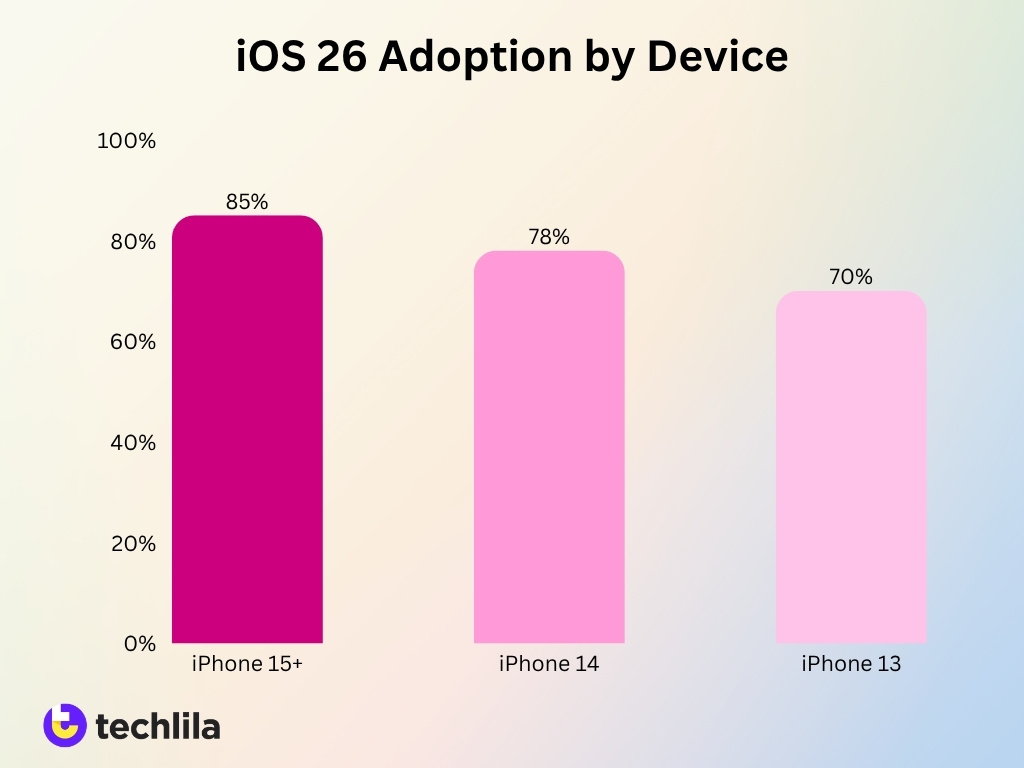
- iPhone 15 and newer models show over 85% adoption of iOS 26 within 4 months of release.
- Devices released within the last 4 years report 74% adoption, highlighting strong compatibility.
- Older devices (5+ years) show adoption rates below 40%, mainly due to hardware limitations.
- iPhone 14 series users reached 78% adoption by early 2026.
- iPhone 13 series maintained 70% adoption rates, slightly below newer devices.
- Devices like iPhone XR and XS were excluded from iOS 26 support, affecting the overall adoption base.
- Premium models (Pro/Pro Max) show 10–15% higher adoption rates than base models.
- Refurbished and second-hand devices account for 12% of slower adopters, delaying updates.
- Enterprise-managed iPhones show faster adoption (80%) due to centralized update policies.
Security Update Policy Influence
- Apple provides 5–7 years of security updates, encouraging long-term device use.
- Continued updates for iOS 18 retained 24% of users on older versions.
- Security-focused users upgrade faster, contributing to early adoption spikes.
- Regular patch releases (26.1, 26.2) improved adoption by 8–10% post-update cycles.
- Enterprise environments prioritize security, resulting in 80% adoption compliance rates.
- Apple’s zero-day vulnerability patches influence rapid update behavior.
- Users concerned with privacy updates show higher upgrade rates (65%).
- Security advisories and alerts create short-term spikes in update adoption.
- Regulatory compliance (e.g., enterprise policies) drives mandatory upgrades in corporate fleets.
Developer and App Ecosystem Impact
- 1.91 million apps currently exist in the App Store, representing the scale of the ecosystem that developers must navigate for differentiation.
- Apple requires new App Store submissions to use iOS 18 SDK as of April 24, 2025, enforcing rapid developer adoption of the latest standards.
- 58% of iOS developers reported positive sentiment toward the Apple ecosystem, while 19% expressed negative views due to unpredictable App Store guidelines.
- 38% of iOS developers experienced at least one App Store rejection over the past year, primarily due to app completeness and in-app purchase non-compliance.
- iOS 18 reached 88.39% adoption on active Apple devices by June 2025, compared to iOS 17’s 5.46% share, demonstrating rapid developer upgrade pressure.
- Apple rejected 1.93 million submissions in 2024, highlighting the stringent review process developers must navigate for App Store compliance.
- iOS 26 reached 48.57% market share by March 2026, rapidly displacing iOS 18 and requiring developers to target the latest version for app relevance.
- Approximately 70% of iOS users upgrade to the latest OS version within months, compelling developers to maintain compatibility with current standards.
- App Store generated $1.3 trillion in developer billings and sales in 2024, with $131 billion specifically from digital goods and services.
- 28 million registered developers operate within the iOS ecosystem globally, creating a competitive market requiring continuous platform adaptation.
Regional Adoption Rates
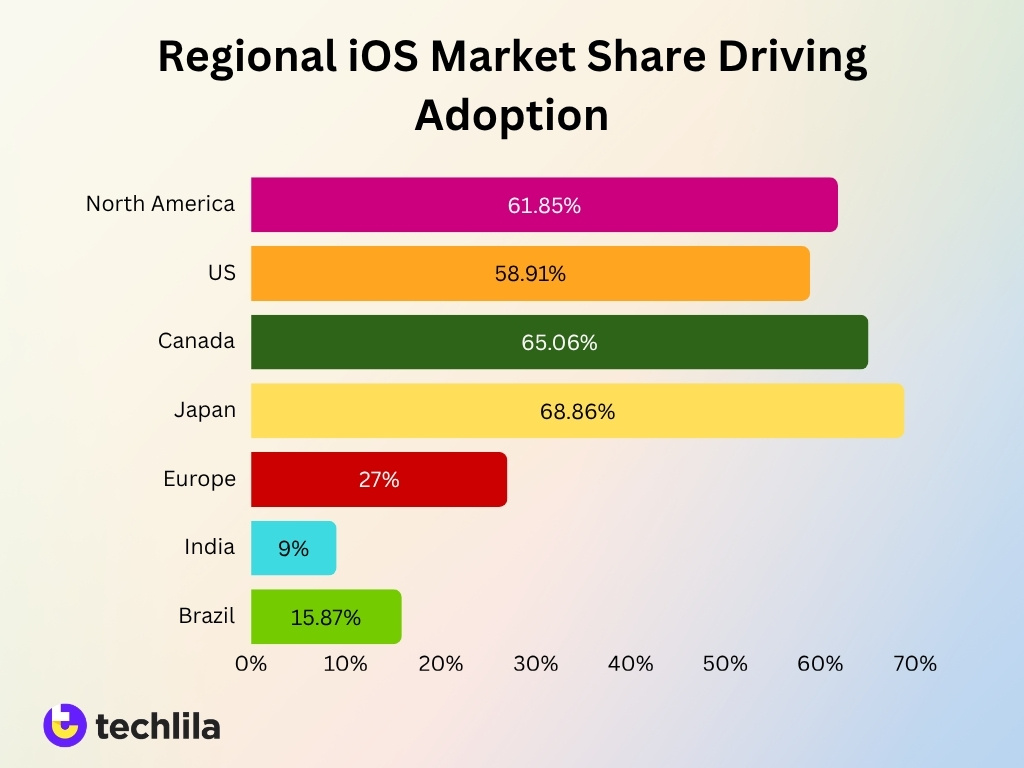
- North America leads iPhone adoption with 61.85% iOS market share in the region as of March 2026.
- The United States boasts 150.7 million iPhone users and 58.91% smartphone market share.
- Canada shows a strong uptake at 65.06% iOS market share among mobile OS users.
- Europe achieved a record 27% iPhone market share in 2025 with 36.9 million units shipped.
- Japan in the Asia-Pacific holds 68.86% iOS dominance, far exceeding global averages.
- India reached 9% iPhone shipment share in 2025, up from 7% in 2024 amid rapid growth.
- Emerging markets like Brazil lag at 15.87% iPhone share due to affordability barriers.
- North America averages a 24-month smartphone replacement cycle versus 40 months in Europe.
Version Fragmentation Analysis
- iOS 26 holds 66% share across all devices, showing relatively low fragmentation.
- Older versions like iOS 18 account for 24% of devices, forming the largest legacy segment.
- Minor versions (iOS 26.1, 26.2) split adoption across multiple subversions.
- Compared to Android, iOS fragmentation remains significantly lower.
- Fragmentation increases slightly due to extended support for older devices.
- Enterprise devices often run specific versions for stability, contributing to fragmentation.
- Regional differences create variation in version distribution globally.
- Fragmentation affects developers, requiring multi-version testing strategies.
- Despite fragmentation, Apple maintains higher uniformity than its competitors.
Market Share Trends
- Apple holds a 31.48% share of the global smartphone market in 2026, leading ahead of Samsung’s 21.38%.
- iOS commands over 58% market share in the US, dominating North American smartphone usage.
- Recent iOS 26 versions capture 66% overall adoption and 74% on iPhones from the last four years.
- Apple’s ecosystem fosters 90% customer retention, with 79% of iOS users staying loyal within the platform.
- iPhone annual shipments exceed 220–230 million units, fueling consistent market share growth.
- Refurbished iPhones account for 60% of sales in markets like India, slowing new device adoption.
- Global iPhone upgrade rates hit record highs in 2026, boosted by premium positioning over Android.
- iOS grows in emerging markets through affordable models, despite Android’s 95% dominance in India.
- Apple services drive lock-in, with trade-in programs offering 30–50% value retention for upgrades.
Factors Affecting Adoption Rates
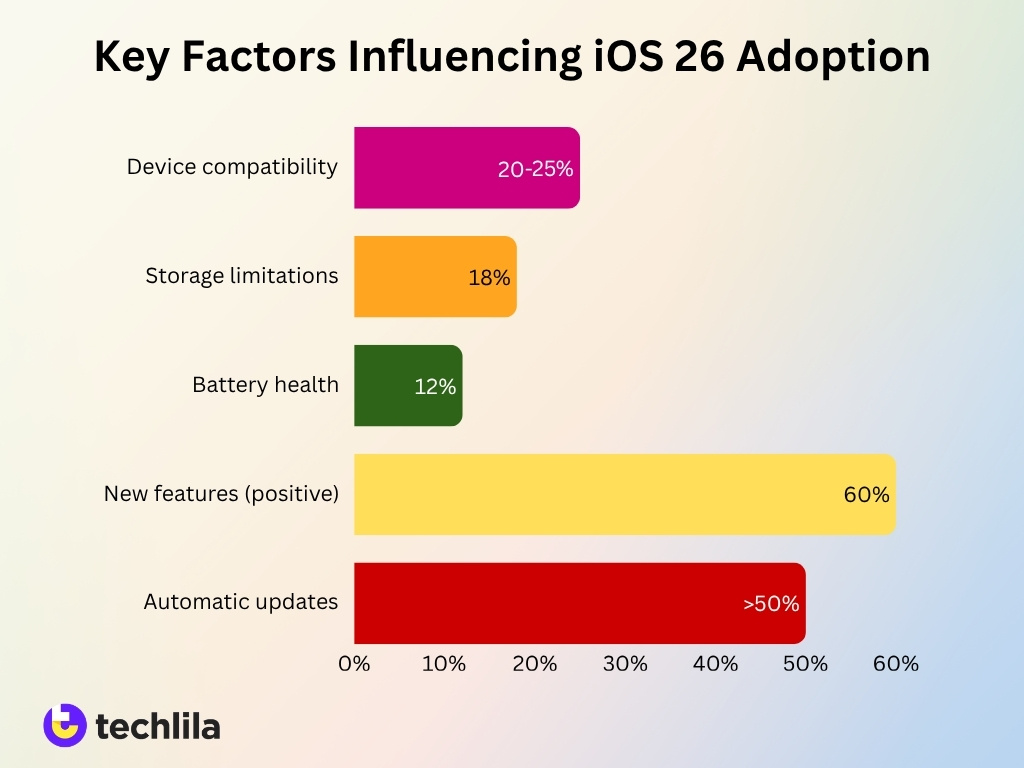
- Device compatibility remains the top factor, impacting 20–25% of users on unsupported devices.
- Storage limitations affect 18% of users, delaying upgrades.
- Battery health concerns lead to 12% of users postponing updates.
- New feature demand drives early adoption among 60% of users.
- Automatic updates contribute to over 50% of installations.
- Regional internet speeds influence adoption timing, especially in emerging markets.
- Enterprise IT policies affect large-scale deployments, often delaying updates by weeks.
- User awareness and notifications drive incremental adoption spikes post-release.
- App compatibility concerns impact 15% of cautious users.
User Upgrade Behavior and Trends
- Over 80% of iPhone users historically upgrade to the latest iOS within a year.
- Around 65% of users upgrade for new features, including AI and personalization tools.
- Security concerns drive 50% of users to update within 2–3 months.
- Automatic updates account for more than half of all installations.
- Users who delay updates cite stability concerns in 30% of cases.
- Approximately 25% of users wait for reviews before upgrading, indicating cautious behavior.
- Frequent updaters (annual cycle) represent 60% of Apple users.
- Users in developed markets upgrade 15–20% faster than those in emerging markets.
- Multi-device Apple users (iPhone + Mac + Watch) show higher upgrade consistency (70%).
App Compatibility and Update Adoption Rates
- Over 90% of top App Store apps support the latest iOS version within 3 months.
- App compatibility issues affect 10–12% of users during initial rollout.
- Developers update apps within 2–4 weeks post-launch, accelerating adoption.
- Apps requiring iOS 26 features drive 20% of upgrades among active users.
- Gaming apps contribute to higher adoption due to performance improvements.
- Enterprise apps often mandate updates, influencing 15% of corporate device upgrades.
- App crashes on older versions increase migration by 5–7%.
- AI-powered apps introduced in iOS 26 boosted user upgrade intent significantly (18%).
- Subscription-based apps (streaming, productivity) show higher compatibility-driven upgrade rates.
Early Adoption vs. Delayed Upgrade Patterns
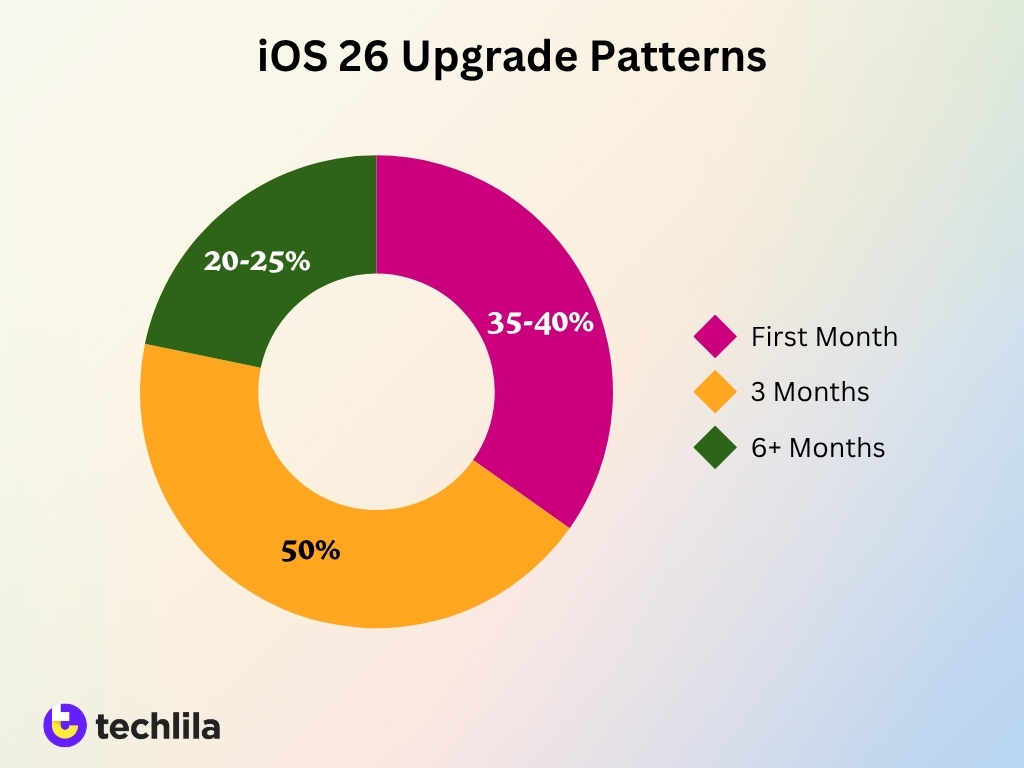
- Early adopters account for 35–40% of users within the first month of release.
- Around 50% of users upgrade within 3 months, marking the fastest adoption window.
- Late adopters (6+ months) represent 20–25% of the user base.
- Enterprise users typically upgrade 4–8 weeks after public release.
- Younger demographics adopt updates 20% faster than older users.
- Premium device users adopt updates 10–15% faster than budget users.
- Users with automatic updates enabled represent over 50% of early adopters.
- Security updates trigger short-term spikes of 5–8% adoption increases.
- Users upgrading alongside new iPhone purchases account for 30% of early adoption volume.
Future Adoption Projections
- iOS 26 is projected to reach 85–90% adoption by late 2026, following historical trends.
- Adoption growth is expected to slow after 75% penetration, entering the maturity phase.
- Emerging markets will contribute to incremental 5–10% growth over time.
- Apple’s extended device support will sustain high adoption rates across cycles.
- Future iOS versions may slightly reduce adoption speed due to increasing feature complexity.
- AI-driven features are expected to boost upgrade intent by 15–20% in future releases.
- Enterprise adoption is projected to reach 90% compliance within 6 months of release.
- Replacement cycles (2–3 years) will continue to drive steady long-term adoption growth.
- Overall, iOS ecosystem retention will remain above 85%, supporting consistent update adoption.
Frequently Asked Questions (FAQs)
66% of all active iPhones are running iOS 26 as of February 2026.
74% of iPhones released in the last four years adopted iOS 26 within about 150 days.
Approximately 24% of iPhone users remained on iOS 18 as of early 2026.
Only about 15% to 16% of iPhone users had installed iOS 26 within the first four months of release.
Conclusion
iOS 26 adoption trends highlight Apple’s ability to maintain a highly unified and rapidly updating ecosystem, even as its global user base continues to expand. Early adoption remains strong, crossing 50% within just a few months, which reflects high user trust in Apple’s updates and the effectiveness of its automatic update system. However, factors such as device compatibility, storage limitations, regional disparities, and user caution still influence how quickly the remaining users upgrade. At the same time, strong developer support, ongoing security updates, and tight ecosystem integration across devices like Mac and Apple Watch continue to accelerate adoption over time.
Looking ahead, projections of 85%+ adoption suggest that iOS 26 will follow Apple’s long-standing pattern of high penetration and low fragmentation. Overall, these trends reinforce Apple’s position as one of the most consistent and efficient software ecosystems in the global technology landscape.

Leave a comment
Have something to say about this article? Add your comment and start the discussion.