




The best Hamachi alternative for most LAN gaming groups is Radmin VPN on Windows, because it is free with no player cap, and ZeroTier or Tailscale when someone in the group runs a Mac or Linux. Hamachi itself is still free, but only for 5 computers per network, and the next step up is a $49 yearly subscription, which is the limit that sends most people looking for programs like Hamachi.
Every tool below was checked in September 2026 against its own site: free-tier limits, paid prices, platforms and whether the project still ships releases. Two entries from the 2025 version of this list did not survive that check. NetOverNet’s domain has expired, and GameRanger’s site has been serving an expired security certificate since January. Both are explained below rather than quietly dropped.
Which Hamachi Alternative Should You Use?
Every alternative to Hamachi below was chosen for one job: letting a group play LAN titles over the internet. Pick by platform first, then by how many people join. Windows-only groups get the easiest setup from Radmin VPN. Mixed groups need a mesh VPN such as ZeroTier, Tailscale or NetBird, all of which have free tiers larger than Hamachi’s 5 computers. If the only goal is letting friends join a Minecraft or other game server you host, a tunnel like playit.gg skips the virtual LAN entirely.
Tool | Free tier | Paid from | Platforms | Best for |
|---|---|---|---|---|
LogMeIn Hamachi | 5 computers per network | $49 per year | Windows, macOS, Linux | The baseline |
Radmin VPN | Unlimited players | Free only | Windows 7 to 11 | Windows LAN parties |
ZeroTier | 10 devices | $2 per device per month | Windows, macOS, Linux, Android, iOS | Cross-platform groups |
Tailscale | 6 users, unlimited devices | $8 per user per month | Windows, macOS, Linux, Android, iOS | Permanent private networks |
GameRanger | Free | Free only | Windows, macOS | Older titles on its list |
playit.gg | Free tier | $3 per month | Runs where your server runs | Minecraft and hosted servers |
SoftEther VPN | Free, open source | Free only | Windows, Linux, macOS, FreeBSD, Solaris | Self-hosted VPN servers |
NetBird | 5 users, 100 machines | Team plan | Windows, macOS, Linux, Android, iOS | Open-source mesh VPN |
Parsec | Free for personal use | $8.33 per month | Windows, macOS, Linux, Android | Couch co-op over the internet |
OpenVPN Access Server | 2 connections | $7 per connection per month | Windows, macOS, Linux, Android, iOS | Traditional VPN control |
NeoRouter | Trial | Not stated | Windows, macOS, Linux, FreeBSD, Android | Legacy setups only |
Source: vpn.net, radmin-vpn.com, zerotier.com, tailscale.com, gameranger.com, playit.gg, softether.org, netbird.io, parsec.app, openvpn.net and neorouter.com, checked September 2026.
Why Look for a Hamachi Alternative?
Hamachi is not dead. LogMeIn still publishes it at vpn.net, and the free plan still works for a network of up to five computers. The catch is what happens at computer number six: the Standard plan costs $49 per year for 6 to 32 computers, Premium is $199 per year for 33 to 256, and Multi-Network is $299 per year. For a group of six friends who play twice a month, that is a subscription for one extra seat, and most LogMeIn Hamachi alternatives below are free at that size.
The second reason is that the category moved on. Software like Hamachi used to mean a handful of VPN emulators. Mesh VPNs such as Tailscale, ZeroTier and NetBird connect machines to each other directly whenever the network allows, and their free tiers were designed for individuals rather than as a trial. If your connection itself is the bottleneck, our guide to increasing internet speed covers the checks worth doing before blaming the VPN.
Best Hamachi Alternatives for Virtual LAN Gaming
These are the ten apps like Hamachi we would install today, ranked by how many groups each one suits, and they are the only alternatives to Hamachi on this page that passed a September 2026 check. The first three cover almost everyone; the rest earn a place for a specific situation.
#1 Radmin VPN
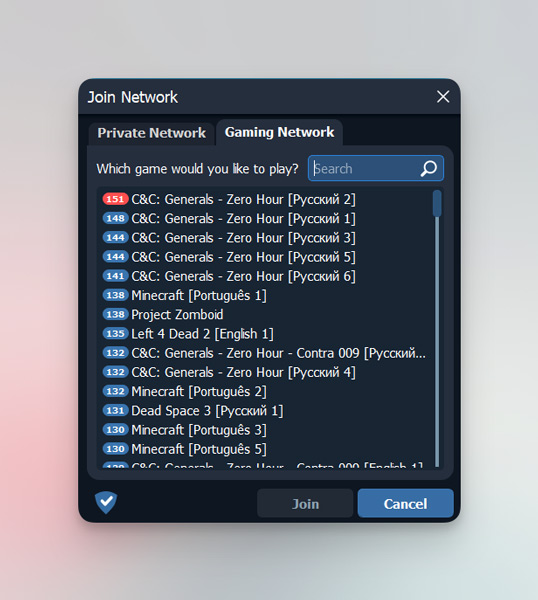
Radmin VPN is the closest thing to Hamachi without the limit. It is free, it does not cap the number of gamers on a network, and setup is a create-or-join screen with a network name and password. Famatech’s site states it runs on Windows 11, 10, 8 and 7, and that is the whole platform list: no Mac, no Linux, no phones. For a Windows-only group that used to hit Hamachi’s five-computer wall, this is the answer, and it is why Radmin VPN leads every list of Hamachi alternatives written this decade.
#2 ZeroTier
ZeroTier creates a virtual Ethernet network that every member joins with a network ID, and it behaves like a real LAN rather than a tunnel, which is what game browsers expect. It runs on Windows, macOS, Linux, Android and iOS. The Personal plan is free for 10 devices, double Hamachi’s cap, and ZeroTier’s pricing page describes it as built for hobbyists, smart-home users and gamers. Paid plans start at $2 per device per month. The one habit to learn is authorizing each new member in the web console, which is also what keeps strangers out.
#3 Tailscale
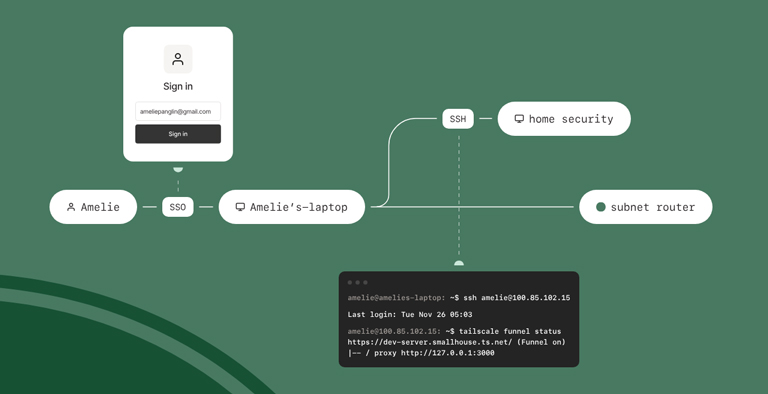
Tailscale builds a private network over WireGuard, and its Personal plan is now the most generous free tier in this list: $0 for up to 6 users with unlimited devices per user, according to its pricing page, which also promises the free tier stays free. Everyone signs in with a Google, Apple, Microsoft or GitHub account, installs the client, and can reach every other machine by name.
Tailscale is less of a “LAN party” tool than Radmin VPN, because games that rely on broadcast discovery may need a direct-connect IP, but for a standing group that also shares a Plex box or a Minecraft server it is the setup you never have to touch again. Paid plans start at $8 per user per month.
#4 GameRanger
GameRanger is different from everything else here. It is not a VPN at all; it is a lobby client that handles matchmaking inside its own app, so pings stay low and nothing installs a network driver. The trade-off is that it only works with the games on its list, which skews toward older titles such as Age of Empires and Aliens vs Predator, and the Mac list stands at 199 games.
One warning before you click through: gameranger.com’s security certificate expired on January 16, 2026 and had not been renewed when we checked, so every browser shows a warning page first. The company footer still reads 2026, so the service is running, but a download behind a certificate warning is a judgment call.

#5 playit.gg
playit.gg solves a narrower problem than a virtual LAN, and for a lot of Hamachi searches it is the better fit. You run one agent on the machine hosting the server, playit hands you a public address, and your friends connect to that address with nothing installed on their side. No port forwarding, no VPN client for guests.
The site lists Minecraft Java and Bedrock among its supported games with a free tier, and Premium costs $3 per month. Because traffic passes through playit’s proxy network, it adds a hop that a direct mesh VPN does not, so use it when the goal is “let people join my server”, not “play a LAN-discovery game”.
#6 SoftEther VPN
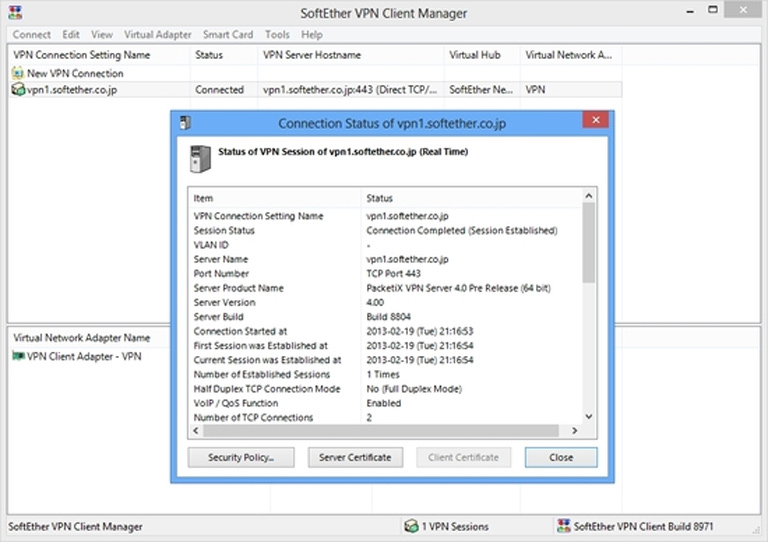
SoftEther VPN is free, open-source server and client software from the University of Tsukuba that speaks SSL-VPN, L2TP/IPsec, OpenVPN and SSTP from one server, with builds for Windows, Linux, macOS, FreeBSD and Solaris. Its Local Bridge mode puts remote players on a real Layer 2 segment, which is what LAN-discovery games want. It is also the most work on this list: you host the server yourself, and the version history on softether.org lists 4.37 from August 2021 as the last stable release. Choose it when you want full control of the server and do not mind reading documentation.
#7 NetBird
NetBird is the open-source answer to Tailscale: a WireGuard mesh with peer-to-peer connections, a hosted control plane, and clients for Windows, macOS, Linux, Android and iOS. The free plan covers 5 users and 100 machines, which is more devices than a gaming group will ever attach, and includes access controls and private DNS. It has fewer years of polish than Tailscale and the sign-up flow assumes a small team rather than a friend group, but if you want an open-source Hamachi alternative, or plan to self-host the whole thing later, NetBird is the pick.
#8 Parsec
Parsec is not a network tool. It streams one PC’s screen and controls to friends so they can play local co-op titles as if they were on your couch, with clients for Windows, macOS, Linux and Android. That makes it the Hamachi alternative for games that never had online multiplayer at all. The Personal plan is free and licensed for non-commercial use; the Warp plan for individuals is $8.33 per month billed annually or $9.99 monthly, and Teams is $30 per user per month. Expect video quality to depend on the host’s upload speed, since everything is a stream.

#9 OpenVPN Access Server
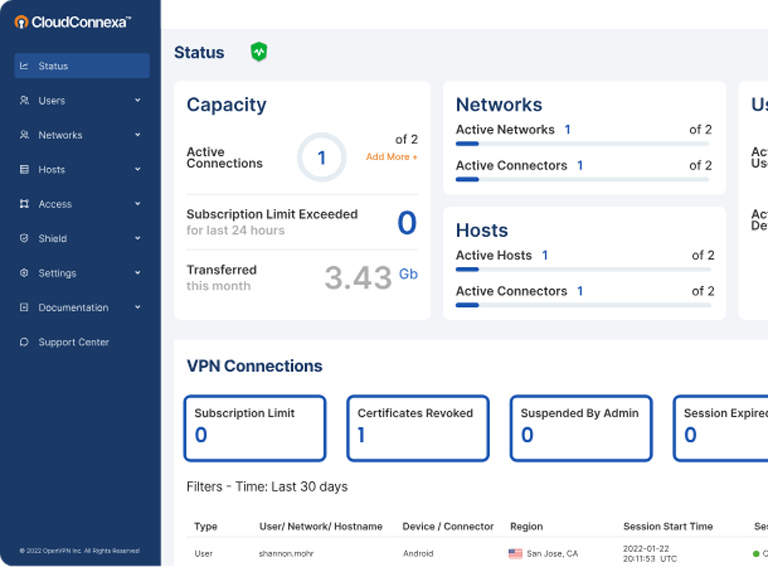
OpenVPN Access Server is the packaged, self-hosted edition of the OpenVPN protocol, with clients for Windows, macOS, Linux, Android and iOS. The free plan allows 2 simultaneous connections, and the Growth plan charges $7 per connection per month, so it is priced for offices rather than a Friday game night. It belongs on this list for one reason: if you already run one for remote access, bridging mode gives your group a LAN without adding another app. For a fresh gaming setup, ZeroTier or Tailscale gets there with far less configuration.
#10 NeoRouter
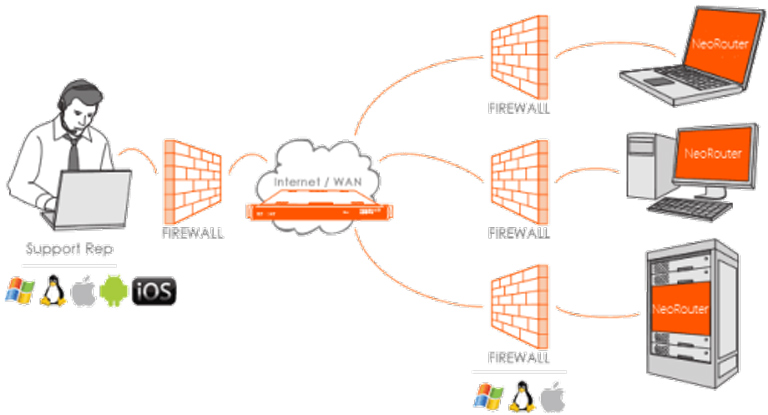
NeoRouter was a zero-configuration mesh VPN before the term was common, with clients for Windows, macOS, Linux, FreeBSD, Android and router firmware such as OpenWrt and Tomato. It stays on the list only for readers who already run it. The download page still offers version 2.4.5, the site offers a trial rather than a stated free tier, and nothing on it names a recent release. Everything NeoRouter did, ZeroTier and NetBird now do with current clients, so start there unless you have a working NeoRouter network you do not want to rebuild.
What Happened to NetOverNet?
NetOverNet sat at number two on this list in 2025 as a simple VPN emulator for private game sessions. In September 2026 its domain resolves to a NameBright “Domain Expired” page, the site answers on no secure port, and there is no announcement of a move. Treat it as gone. If you still have the client installed, it will stop working the moment its servers do, so migrate the group to Radmin VPN or ZeroTier now rather than mid-session.
Hamachi Alternatives for Minecraft
Minecraft is the game most people have in mind when they search for a Hamachi alternative for Minecraft LAN worlds, and it has two clean routes. For a LAN world, where one player opens their single-player world to others, a virtual LAN does the job: put everyone on the same Radmin VPN or ZeroTier network, open the world to LAN, and the host shares the address and port the game shows.
For a dedicated server, playit.gg is simpler, because guests need nothing installed and never join a VPN. Either route avoids Hamachi’s five-computer limit; the VPN route also works for any other LAN title the group plays.
Hamachi Alternatives FAQ
Is there a free Hamachi alternative with no player limit?
Yes. Radmin VPN is free and puts no limit on the number of gamers on a network, but it runs only on Windows. On mixed platforms, Tailscale’s free Personal plan covers 6 users with unlimited devices, and ZeroTier’s free plan covers 10 devices.
What is the best Hamachi alternative for Mac?
ZeroTier or Tailscale. Both have native macOS clients and free tiers, and both let Mac and Windows players share one network. Radmin VPN, the usual Windows recommendation, has no Mac version.
Is Hamachi still free in 2026?
Yes, for up to 5 computers per network, according to LogMeIn’s vpn.net page. Beyond that, plans cost $49, $199 or $299 per year depending on how many computers and networks you need.
Does a Hamachi alternative add lag?
Any VPN adds some overhead, but tools that connect peers directly, such as Tailscale, ZeroTier, NetBird and Radmin VPN, keep it low because traffic does not detour through a relay. Tunnels like playit.gg route through a proxy and add a hop by design.
Which Hamachi alternative is open source?
SoftEther VPN and NetBird are fully open source. ZeroTier and Tailscale publish their client source under open licenses while running hosted control services. Radmin VPN and GameRanger are closed source.
Is GameRanger safe to download right now?
The service is running, but its website’s security certificate expired on January 16, 2026, so browsers show a warning before the download page. Until it is renewed, we suggest Radmin VPN for the same games unless a title only works through GameRanger’s lobby.
Is It Worth Leaving Hamachi?
If your group is 5 computers or fewer and Hamachi works, there is nothing to fix. The moment a sixth player joins, or a Mac shows up, the alternatives are better than the $49 upgrade: Radmin VPN for a Windows-only group, Tailscale or ZeroTier when platforms mix, and playit.gg when all you want is a public address for a server you host. The decision that outranks everything else is platform, because the easiest Hamachi replacement on this list runs on Windows alone.
Whatever you choose, check the free-tier numbers on the vendor’s own pricing page before you invite the group, since those limits are what changed most between the 2025 version of this list and this one. Two long-running entries disappeared or broke in that time, so a working link today is not a promise for next year.

Sam
+1 LiteManager software for remote access too.
John J
I think you should add Radmin VPN to the list. It is the best Hamachi alternative.
Adam H
Just recently discovered the benefits of a VPN for gaming, and I’m super happy. I read that it improves speed, and you can access early game releases (if the game is not yet released in your country). I have a Surfshark subscription, so I decided to try it out, and it works quite decently.
Dinesh
Nice article. Keep posting more and more.